
Shopify Merchants, ChatGPT Shopping & Google AI Mode
Written and edited by: Dirk

Ok. Am I the only one who actually remembers Colossus: The Forbin Project? You know. The 1970 Joseph Sargent techno thriller wherein a Defense Department super computer (not named SkyNet, James Cameron totally swears he’s totally with you on not remembering any of this) becomes sentient, teams up with its Soviet super computer counterpart and proclaims itself The Voice of World Control? Well, good news. OpenAI and Google aren’t quite there yet. They’re still focused on helping us buy Chupacabra costumes for our chow dogs at 4 AM.
But seriously, while we’re not dealing with malevolent superintelligence, something genuinely significant is brewing in the AI shopping space. And unlike voice commerce (remember that revolution?), QR codes (the future of everything circa 2011), or social commerce buttons that nobody clicked, this one has actual infrastructure behind it. Real code. Real checkout flows. Real e-commerce merchants who are really testing it. The question isn’t whether AI shopping will happen. It’s happening. The question is what Shopify merchants actually need to do about it.
Is ChatGPT and Shopify’s Integration Just Another Channel?
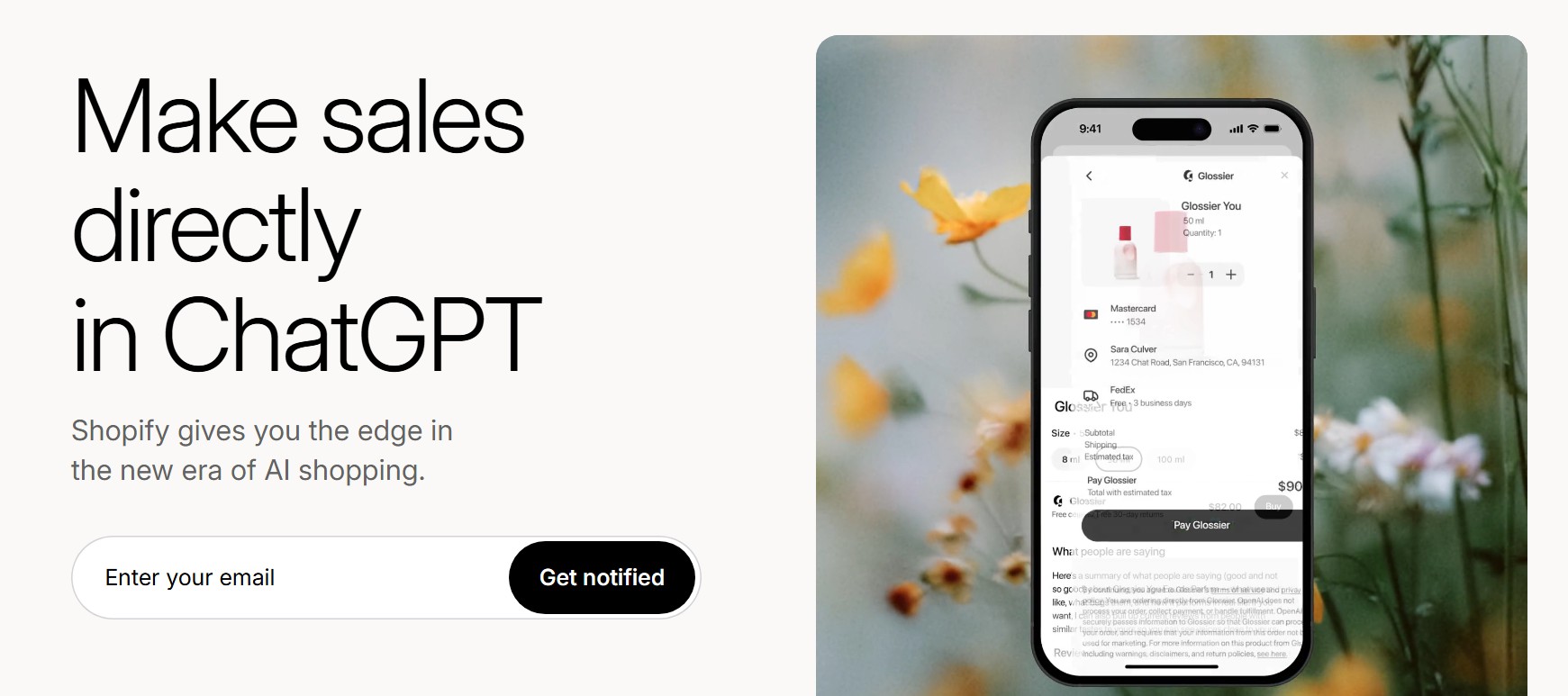
Eric and Jay left me to my own devices on this one, so I think I’ll start with the Shopify-OpenAI partnership. I think it represents something that we haven’t really seen before. It isn’t another 3rd party marketplace demanding inventory feeds and taking 15% commissions. Or another ad platform promising revolutionary attribution models. It’s something weirder and more interesting.
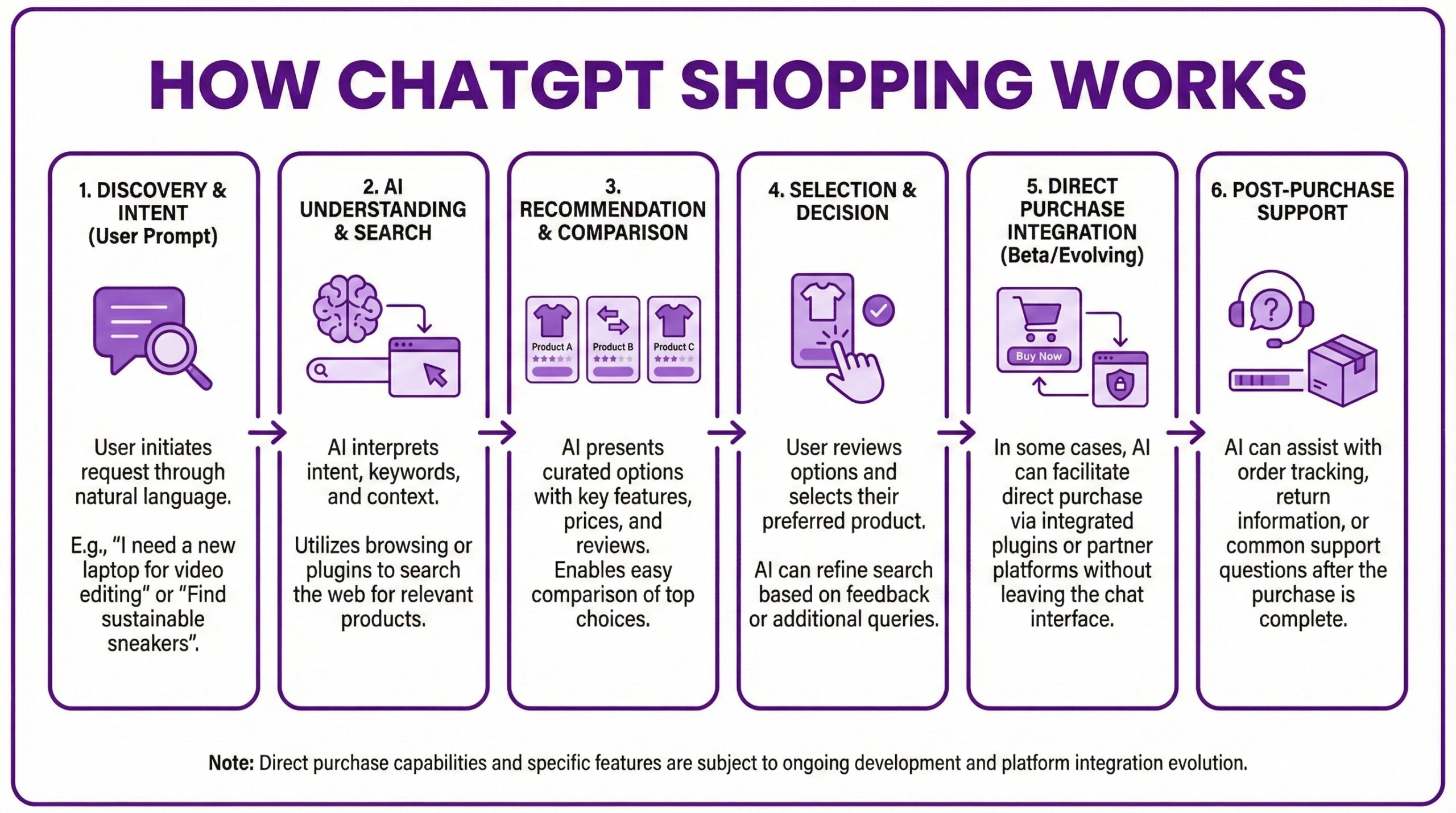
When consumers ask ChatGPT Shopping questions (“Shark Blanket Onesie under $49.95” or “gifts like a miniature desktop punching bag”), the LLMM will surface products from Shopify merchants directly in the conversation and shoppers will be able to complete their purchases without leaving the chat interface, using what OpenAI calls their “Agentic Commerce Protocol.”
The technical term matters here. “Agentic” means the AI acts on behalf of the user, handling the transaction details while the merchant remains the seller of record. You still own the customer relationship. Orders flow into your Shopify store with proper attribution. Your brand appears clearly in the interface. So. What makes this different from previous attempts at conversational commerce is scale and context. ChatGPT has purportedly hit 800 million weekly users. Many of the questions they’re asking naturally involve shopping. Someone planning a dinner party asks about recipes, then needs serving dishes. Someone researching comfort needs a shark onesie.
What eCommerce Merchants Should Actually Do About It
Here’s where I’ll be kind and uncynical and spare you the usual breathless tech journalism. You don’t need to restructure your entire retail model around ChatGPT Shopping. You don’t need a “ChatGPT strategy.” Or rather, you don’t need either YET. Right now you just need three things:
First, clean product data. Shopping GPT will only surface what it can understand. Your product titles, descriptions, and attributes need to be accurate and comprehensive. Not in-organically stuffed seo keyword word salads. Actual, useful use-case information about what you’re selling. Think less “Swaddle Blanket for Adults” and more “Wearable Funny Flannel Shark Sleeping Bag, Soft Cozy Onesie Costume for adults and children.”
Second, structured data. If you haven’t implemented proper schema markup on your product pages yet, today’s the second best time. The Agentic Commerce Protocol relies on standardized product feeds. Shopify handles much of this automatically, but custom implementations can interfere. So. Check your structured data. Test it. Fix what’s broken.
Third, accurate inventory. Nothing will erode consumer trust in Shopping GPT faster than ChatGPT Shopping offering products you don’t actually have. Real-time inventory sync will be especially critical in this world where products are purchased outside your traditional ecommerce storefront. So. If your inventory management’s held together with spreadsheets and prayers, you’re going to want to address that sooner rather than later.
What Does Google’s AI Mode Means for e-Commerce?
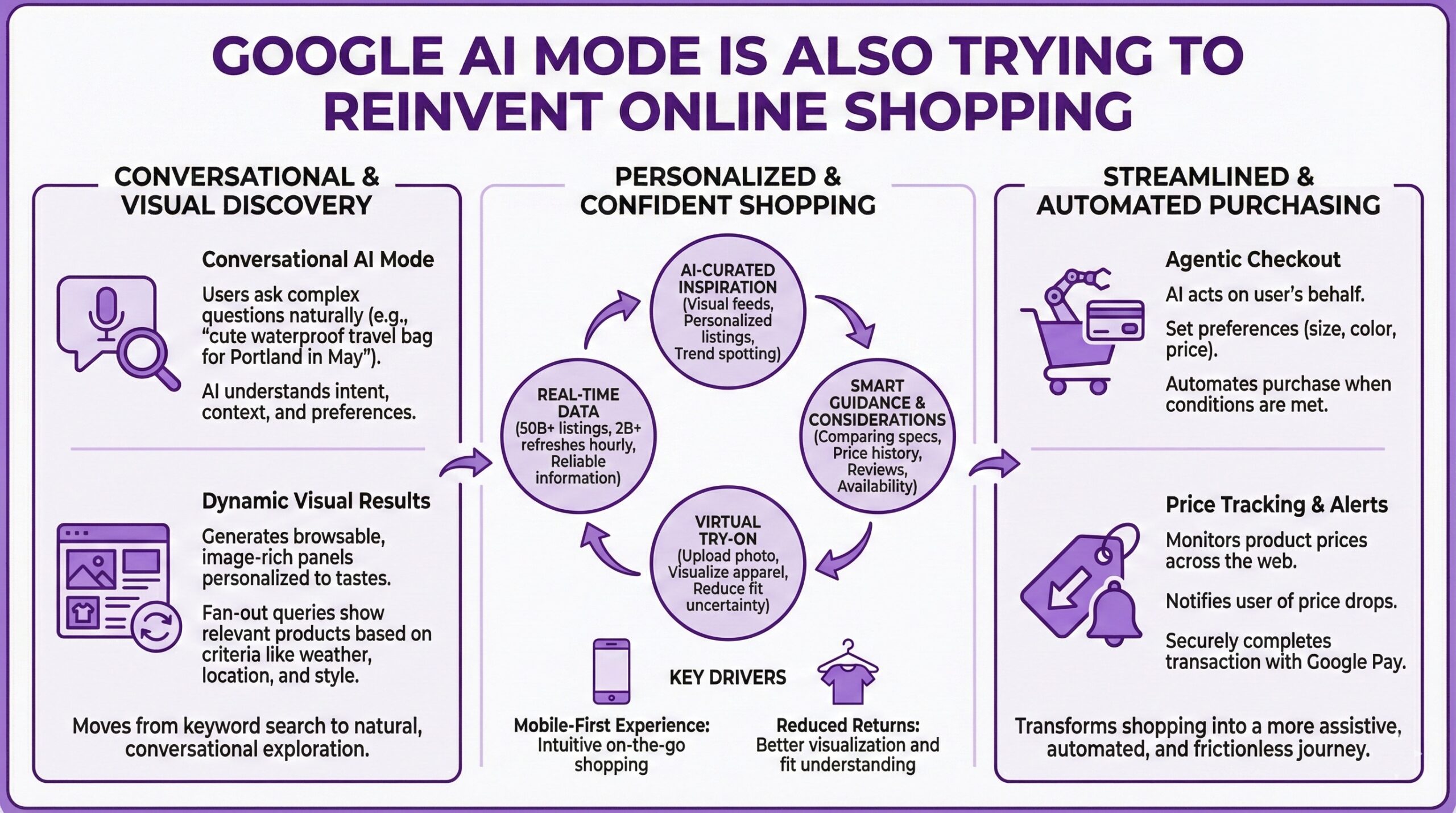
While OpenAI’s building shopping into chat, Google’s busily rebuilding the way shopping fits into search. Their AI Mode represents a more ambitious transformation, turning search from a list of links relevant to shopping into an actual virtual shopping assistant. The system utilizes what Google calls “Query Fan-Outs” to take complex, multi-faceted questions and address all aspects simultaneously. In other words. If you ask AI Mode about “hiking Anasazi ruins next summer,” it returns research on hydration and nutrition, recommends safety precautions, factors in summer heat to suggest best times to start, suggests essential gear and supplies along with associated retailers, then it reminds you to respect the history of the sites while visiting. All in one response.
That isn’t just an evolution that’ll give consumers better search results. That’s a compressed shopping journey. That’s what would have required searches for gear and supplies and hiking guides and historical guides a year ago … i.e. multiple searches across multiple sessions that can now happen in a single conversation. The implications for e-commerce are … complicated.

Visibility in An Agentic World Virtual Personal Shoppers
Google’s Shopping Graph now contains over 50 billion product listings and Google AI Mode synthesizes information from all of them to offer consumers personalized recommendations. That means your products or services will go from competing for search rankings positions and real estate on SERPs; to competing for contextual relevance in responses generated by LLMs.
Google’s “agentic checkout” feature allows shoppers to set price thresholds and preferences, then have the AI complete purchases automatically when conditions match. Set a maximum price for those running shoes, specify your preferred color, and the system buys them when they go on sale. For merchants, the results are likely to be unpredictable. Flash sales might trigger waves of automated purchases. Price changes ripple through the system instantly. Your competitor drops their price by $55 cents and AI switches its recommendation mid-conversation.
Traditional retail tactics like scarcity marketing and urgency-based conversion optimization become less effective when the buyer is an algorithm operating on preset parameters. “Only 3 left in stock!” won’t motivate an LLM that’s monitoring inventory levels across the entire Internet.
Reality Check Re Google AI Mode and ChatGPT Shopping
Now, let’s pump the brakes a bit. Every few years, we get promised a retail revolution. Voice commerce was supposed to eliminate screens. Social commerce was going to turn Instagram into the world’s biggest mall. Livestream shopping would make QVC obsolete.
What actually happens is more modest. New channels emerge, capture some percentage of sales, then settle into the mix. They complement rather than replace. They serve specific use cases rather than universal adoption. AI shopping will likely follow this pattern. Some categories will thrive (replenishment purchases, considered purchases requiring research, gift-giving). Others won’t (impulse buys, fashion where browsing is the point, anything requiring touch or fit). Some demographics will embrace it immediately. Others will ignore it entirely. Full deployment could take years. By the time it reaches critical mass, competitors will have responded, regulations may have emerged, and consumer behavior will have evolved in unexpected ways.
What Agentic Assisted Shopping Success Will Look Like
Here’s what I think will happen … I think AI shopping will become another channel. Not the only channel, not even the primary channel for most merchants, but a meaningful source of high-intent traffic and sales. Probably 5-15% of total e-commerce volume within five years, concentrated in specific categories and demographics. The merchants who benefit most won’t be the ones who completely restructure their business around AI. They’ll be the ones who were already doing the fundamentals well. Clean data, good operations, authentic brand voice, genuine value proposition. The boring stuff that actually matters.
The real transformation isn’t in how people buy, but in how they discover. AI excels at synthesis and recommendation. It can connect dots humans miss. Someone searching for home office equipment might discover your specialty coffee subscription because the AI understands the connection between remote work and coffee consumption. These serendipitous discoveries, currently the province of social media algorithms, become more intentional and contextual.
Google’s AI Mode Shopping As An Answer to Shopping GPT
Remember. These are competing opening salvos so we may not land in a world dominated by either. Remember Netscape? AI shopping is happening, but it’s not happening to you. It’s happening around you. Another evolution in the ongoing story of online retail. Another channel to consider, tool to leverage, complexity to manage. The merchants who’ll thrive are the ones who focus on fundamentals, adapt to change, and remember that behind every AI Answer there will still be a human consumer trying to meet a need or solve a problem. Colossus demanded absolute obedience. ChatGPT and AI Mode just want your product feed to validate. That’s progress, I suppose.
Though I’d still keep an eye on them. You know, just in case.
Do I need to pay to have my products appear in ChatGPT or Google AI Mode?
No. Neither system has turned into a digital protection racket yet. Currently, both surface products based on actual relevance, imagine that. OpenAI does take a small commission when someone actually buys something through their system, which feels almost quaint in its straightforwardness. No bidding wars, no premium placement packages. Google, meanwhile, maintains their traditional sphinx-like silence about how they’ll eventually monetize AI Mode shopping. But for now, your products can appear based purely on merit. It’s like we’ve temporarily returned to the early internet’s idealistic phase, though history suggests this won’t last forever.
Will AI shopping replace my Shopify store?
No. Despite what breathless tech blogs might suggest. AI shopping channels are more like having a particularly clever sales associate who works at multiple department stores simultaneously. You still need your flagship location. Customers still want somewhere to browse at their leisure, read detailed specifications, and know exactly who they’re buying from. Your Shopify store remains your digital headquarters. These AI channels? They’re just very efficient foot traffic generators. Think of them as the digital equivalent of those old-school product placement deals, except the AI decides what gets featured based on what it thinks people actually want.
How do I optimize for AI shopping discovery?
The irony is that optimizing for AI means writing like humans think. Forget the keyword stuffing nightmares of 2010. Write product descriptions that would make sense if you were explaining your product to an intelligent friend over coffee. Include the context of how someone might actually use your product. Keep your inventory data accurate, because AI systems have even less patience for “out of stock” surprises than humans do. Implement proper structured data, but think of it as good manners rather than manipulation. The fundamentals that help actual humans understand your products are exactly what help AI systems grasp what you’re selling.
Should I be worried about price competition from AI agents?
Price comparison bots have been around since the dawn of e-commerce. Remember shopping aggregators from 2005? This is just the latest evolution of that same anxiety. The answer remains boringly consistent. If you’re competing solely on price, you’ve already lost, AI or no AI. Build a brand people actually care about. Ship things quickly. Answer customer service emails like a human being wrote them. Offer products that aren’t available from seventeen different dropshippers. The race to the bottom on pricing was never a winning strategy, and AI doesn’t change that fundamental truth.
What if my products aren’t showing up in AI recommendations?
Before you panic, run through the checklist. Are you actually on Shopify, or are you using some bespoke platform built in 2003? Is your product data more complete than a teenager’s college application, or are half your fields blank? Have you implemented schema markup, or are you hoping the AI will somehow divine your product details through digital osmosis? Are you selling in a region these systems actually support, or are you wondering why your Antarctic ice sculpture business isn’t getting traction? These systems are rolling out with all the speed and grace of a government infrastructure project. If you’ve done everything right and still aren’t showing up, congratulations, you’re experiencing the normal rollout process, not a personal vendetta against your store.