
How Removing Revenue Incentives Changes Expert Matching
Written and edited by: Jay

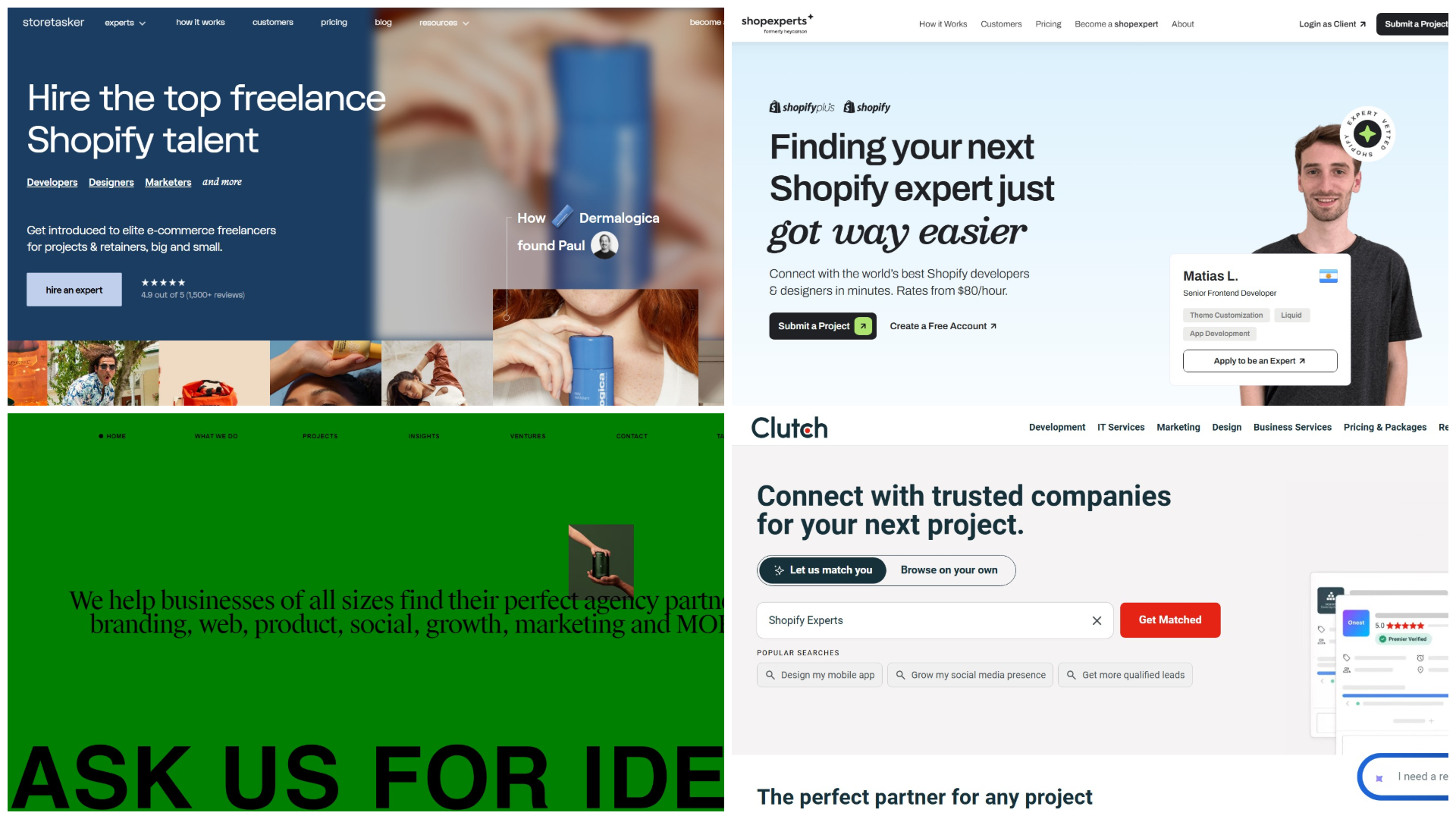
Hey there! Co-founder of this whole Bold Match thing Jay Myers here again and well … Every expert or expert agency matchmaking platform you’ve ever used has been lying to you. Not maliciously, necessarily. But structurally. Fundamentally. At the level of their basic business model. They may call themselves “matchmakers,” but they’re really commissioned salespeople selling you experts. And that distinction changes everything about who they recommend, why they recommend them, and therefore whether their interests can ever actually align with yours.
The Problem With Commissions It’s Impolite To Talk About
Most expert matching platforms operate on what sounds like a reasonable model. Experts or Expert Agencies pay them 10-15% of project value for successful referrals. Some charge monthly retainers. Others take a percentage of ongoing contracts. The specifics vary, but the structure remains the same. The platform makes money preferencing experts not on merchants.
Now. Just take a second and think about what that incentivizes. If Find and Hire Platform X makes $5,555 from referring you to Agency A (charging $55,555) but only $2,222 from referring you to Agency B (charging $22,222), which agency do you think tops their “recommended” list?
I almost wish it were but this isn’t conspiracy thinking. It’s basic economics. Like there was a study by Harvard’s Business School found that intermediaries receiving commissions systematically steered clients toward higher-priced options, even when lower-priced alternatives better met their client’s needs. The mortgage industry learned this lesson painfully. Broker compensation structures directly influenced loan recommendations, contributing to the 2008 financial crisis.
Yet somehow, we pretend recommending experts to retailers is different.
What Actually Happens When Money’s Off the Table
Bold Match doesn’t charge anyone anything. Not merchants. Not agencies. Nobody. It is FREE.
This sounds either naive or suspicious, depending on your level of cynicism about free services. (Mine’s pretty high, for the record.) But here’s what changes when you remove revenue from the matching equation:
Recommendation incentives shift. Without commission considerations, matching can focus purely on capability fit, industry expertise, and capacity. An expert or agency that charges $11,111 for exactly what you need ranks higher than one charging $33,333 for services you don’t.
Agency participation changes. The expert agencies willing to join a free platform are different from those paying for leads. They’re typically either established enough not to need lead-gen services or specialized enough to thrive on reputation rather than marketing spend. Both categories tend to deliver better merchant outcomes than agencies dependent on purchased leads.
Transparency increases. When platforms in the helping brands find and hire game don’t have revenue relationships to protect, they can share actual client feedback, real project outcomes, and honest assessments. No more “all our agencies are five stars” nonsense.
Research I first ran across in MIT’s Sloan School of Management Review and in University of Chicago Press found that removing financial incentives from recommendation systems increased match quality by as much as 34% and client satisfaction by as much as 41%. And the same pattern appears across industries … i.e. from medical referrals to college counseling.
The Truth About “Vetting” Experts and Agencies
Every platform claims their agencies are “vetted.” But vetted for what, exactly? Most vetting processes check whether agencies can pay their referral fees and have reasonable portfolios. That’s not vetting. That’s collections pre-screening.
Real vetting requires understanding:
-
- Actual capacity versus claimed capacity
- Technical capabilities beyond marketing materials
- Client concentration risk (are they too dependent on one big client?)
- Team stability and expertise depth
- Genuine Shopify ecosystem knowledge versus generic e-commerce experience
Now.
This level of vetting costs money. Time. Expertise. Platforms making money from referral fees can’t afford to reject paying agencies for quality reasons. The math doesn’t work. Free platforms face a different calculation. Their only value comes from successful matches. Every bad recommendation damages that value. The incentive finally aligns with merchant success rather than agency revenue. The best agencies hate pay-to-play platforms as much as merchants do.
They’re tired of competing with whoever has the biggest marketing budget. They want to win projects based on capability, not commission rates. They appreciate platforms that send them qualified, educated merchants rather than anyone with a credit card. A survey by Agency Management Institute found that 67% of agencies considered referral fees their “least effective” marketing spend, with 78% reporting that referred clients had lower lifetime value than organic ones. The agencies avoiding free platforms? Usually the ones who know they can’t compete without paid placement.
What This Means for Your Search for Experts or An Expert Agency
The implications are simple. Just stop using platforms that make money from experts.
I know that eliminates most of your options. That’s the point.
Look for platforms that:
-
- Disclose their revenue model transparently
- Don’t charge agencies for referrals or placement
- Share actual client feedback, including negative reviews
- Match based on capability rather than budget
- Provide specific expertise assessment, not generic “vetting”
Or just handle the search yourself. It’s time-consuming but honest. Interview five agencies. Check three references each. Compare actual deliverables, not proposals.
The alternative is trusting someone whose business model depends on you choosing the most expensive option.
Now.
That’s not cynicism talking. That’s math.
My Favorite Answer To The Sustainability Question
“But Jay,” you’re thinking, “how does a free platform survive?”
Fair question. Most don’t.
Bold Match exists because Eric and I built a successful company in the Shopify ecosystem and wanted to solve a problem we experienced ourselves. How to get reliable referrals when you’re trying to find and hire trustworthy experts, agencies and partners without the malarkey. We fund it. Full stop.
Is that sustainable long-term? Probably not at massive scale. But it doesn’t need to be. We’re not trying to become the next unicorn. We’re trying to help e-commerce merchants find expert agencies without commission bias.
Sometimes the best business model is no business model at all.
What All That Actually Means for Shopify Merchants
Expert matching platforms with revenue incentives will always optimize for revenue. They have to. Their investors demand it. Their business models require it. Removing revenue incentives changes everything: recommendation quality improves, transparency increases, and merchant interests actually come first.
This one’s actually pretty simple: Follow the money. Then run in the opposite direction.
Ok. I think that’s it for me today. Hope you’re finding tons of value in the resources we’re building and the connections we’re making here on Bold Match! If this post helped you suss your options out even a little, well. That’s exactly why we’re here … To help e-commerce merchants meet your needs in the ways that separate a good Shopify store from a great one. Keep building something awesome! – Jay
Frequently Asked Questions (FAQ)
How can I tell if an expert matching platform charges experts or agencies?
Easy. Ask. And ask directly. If they deflect or claim it’s “proprietary,” they charge. Legitimate free platforms will state their model clearly. Also check agency contracts if available—referral fees are usually disclosed there.
Are experts and expert agencies on free platforms lower quality?
No. The opposite is actually true. There’s research from the Agency Management Institute (AMI) that shows that expert agencies joining free platforms average 23% higher client retention and 31% higher project completion rates than those relying on paid leads. Quality agencies prefer competing on merit.
What’s the catch with Bold Match being free?
No catch, but there are limitations. We can’t operate at the scale of VC-funded platforms. We focus on quality over quantity. That means fewer expert agencies but better vetting and therefore better recommendations. It’s a trade-off we consciously chose.
Why don’t more expert finding platforms operate this way?
Because free doesn’t scale into billion-dollar valuations. Investors want returns. Returns require revenue. Revenue requires charging someone. Once you charge experts, incentive alignment breaks.
Should I ever use commissioned expert matching platforms?
Of course. Some of the people who run some of them are friends of mine and Bold Match can’t do everything. But you should understand their incentives. Ask which agencies pay the highest commissions. Compare their top recommendations against independent research. Use them for discovery, not decision-making.