
Has Video Demonstration Commerce Changed Retail?
Written and edited by: Jay

Hey there! Co-founder of this whole Bold Match thing Jay Myers here again and while writing that social commerce thing last month, something kept nagging at me. Every platform pitch, every trend report, every conference keynote seems to bundle demo commerce and social commerce together like they’re the same thing. They’re not. Video demonstration commerce represents a fundamental shift in how consumers are evaluating products online, while social commerce is mostly about where they discover them. The distinction matters because one of these may change your conversion rates in measurable ways, and it’s not the one getting press.
The numbers tell an interesting story. According to Wyzowl’s research 89% of consumers say watching a video has convinced them to purchase a product or service. That’s not aspirational. That’s not projected. That’s happening right now. Meanwhile, 91% of businesses use video as a marketing tool, up from 61% in 2016. But here’s where it gets interesting for Shopify merchants specifically. The platforms and tools have finally gotten simple enough and cheap enough that smaller store owners can mount a video commerce campaign, without hiring a production team.
I should be clearer about that though, because we aren’t really discussing one thing here , we’re discussing three things. Because … “Video Demonstration Commerce” breaks down into three distinct categories, and each one has different implementation costs, technical requirements, and return on investment math. And understanding these distinctions will help you figure out which approach may make sense for your store, your products and crucially, for your customers.
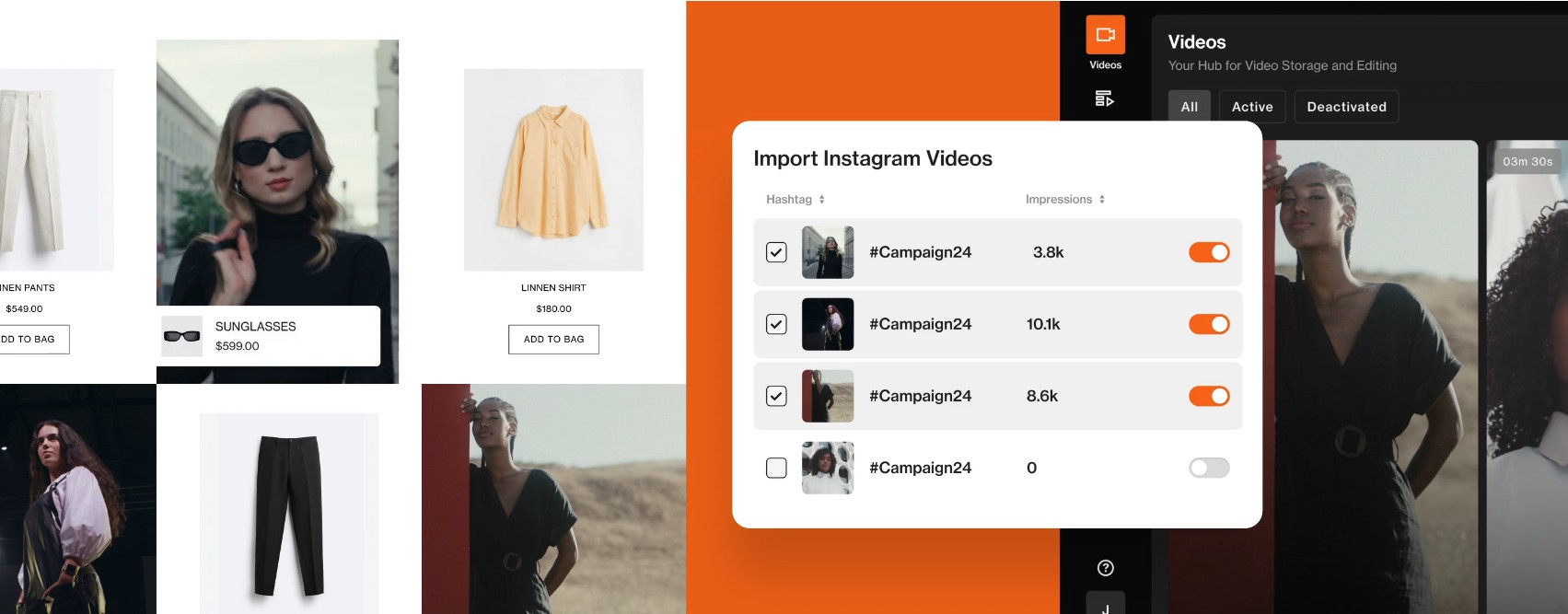
Using Product Demonstration Videos in eCommerce
They’re so ubiquitous now, that it hardly needs to be said again here, but product videos are the workhorse of demonstration commerce. These are your standard, pre-recorded videos showing off products or how they work. Nothing fancy, nothing revolutionary, just clear communication about what was bought or what’s being sold. Yet retailers consistently underestimate their value.
I suppose that’s just an understandable side effect of e-commerce being both 30 years old and changing so completely so often that it’s effectively always new. In other words, it wasn’t so long ago at all that unboxing videos were only for the proud owners of the Iron Man Mark III (Silly Thing’s “TK” Edition) and other ultra rare Hot Toys collectibles; not a generically applicable CRO strategy. Just think about your own shopping behavior. When was the last time you purchased a technical or complicated anything without watching at least one video first? Exactly. Your customers aren’t different. They’re doing the same thing, except when they can’t find videos on your site, they’re going to YouTube or Instagram or TikTok or Twitch, (getting the picture?) where your competitors or random reviewers own the narrative that’s being built around your products.
The data backs this up unambiguously. Shopify’s own research shows that merchants who add video to their product pages see up to 144% increase in conversion rates. Similarly, InVideo has reported that landing pages with videos generate 80% more conversions than those without. Those aren’t marginal improvements. They are the kinds of bumps that can change a business.
You don’t even need Hollywood production values to get those results. Customers want clarity, not cinema. They want to see the product work, understand its size relative to real objects, hear what it sounds like, watch someone actually using it. A well-lit smartphone video showing actual use beats stylization that obscures functionality. The sweet spot for product demonstrations runs between 30 seconds and 2 minutes. According to a 2024 Vidyard Report, videos under 2 minutes earn the most engagement, with completion rates dropping significantly after that mark.
Oh and that isn’t about shortening attention spans or anything like that. It’s just an expression of purchase intent. Consumers watching product videos are trying to make buying decisions, not be entertained. Cost considerations matter here. You can start with literally nothing but your phone and natural light. Native Shopify video features now support uploads up to 1 GB (and up to 10 minutes in length), which is more than enough for product demonstrations. No monthly fees, no additional apps, just upload and go. For store owners ready to scale, apps like Tolstoy or VideoWise add interactive elements and better analytics, but they aren’t necessary to start seeing results.

Shoppable Video Has Transformed Online Shopping
If you read that Social Commerce post I started with, you may recall that shoppable videos add clickable product tags to video content that lets consumers buy from whatever they’re watching directly. If it sounds futuristic, it shouldn’t. Luxury brand SSENSE was playing with the concept as far back as 2012, YouTube tried Interactive Cards in 2015 and Instagram’s first shoppable posts slash videos pilot launched over eight years ago now. So. They’ve been a tactic available to online retailers long enough for us to know more than a bit about what they’re good for and what they aren’t. Like. They work particularly well for fashion, home decor, and lifestyle brands where context drives desire. And the psychology at play in their efficacy is pure impulse capture.
Traditional product videos ask things of customers, that they remember whatever they wanted, navigate to its product page, maybe search if they can’t find the whatever again immediately. Each step is a potential point of abandonment. Shoppable videos collapse that journey into a single click at the moment of maximum interest. Research shows that shoppable videos deliver engagement rates of 7%, compared to 2% for traditional videos. And that’s real engagement, meaning clicks on products, not just views. More importantly, they report that customers who interact with shoppable videos have a 3x higher average order value (aov) than those who don’t.
Of course, as they’re typically aimed at consumers in social marketplaces where they’re willing to shop but there to be entertained, successful deployment will require some strategic thinking. Shoppable videos work best when the products feel discovered rather than pushed. Like here’s one for Eric: A tour of a nearby skatepark that happens to feature purchasable steezy fashions, custom decks, and designer protective gear will outperform anything that feels like a catalog. Or pet videos showing harnesses, beds, squeaky toys and even “gourmet” organic food with individual items available for purchase. Or cooking demonstrations where ingredients and tools are all tagged and feel natural
Now. Shopify’s native capabilities here are currently limited but are improving. You can’t create true shoppable videos directly in Shopify yet, but apps like VideoWise, Videofy, and Reactive Video have filled that gap. Pricing typically runs $50-500 per month depending on features and video views. For Store Owners doing over $50K monthly, the math usually works out pretty well.
That said, unlike demos the technical requirements for shoppable videos aren’t trivial. You’ll need videos produced with shoppable moments and consumers looking to engage with lifestyle content not blunt advertisements in mind, products properly tagged in your system, and usually some custom development to keep the entire experience smooth. This isn’t where most retailers should start their video commerce journey, but it’s what most successful video strategies will evolve into.
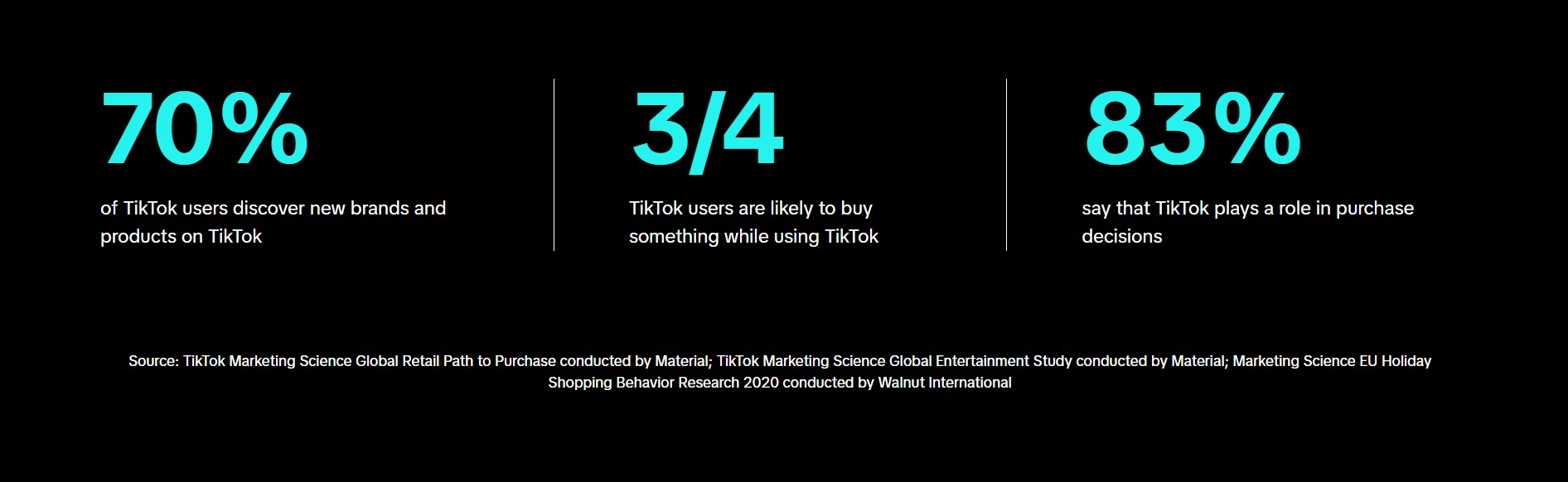
Live Shopping and Livestream Selling on Shopify
But many merchants won’t end their journeys down this road there. You see. Live shopping probably represents video commerce at its most ambitious and, honestly, well maybe, at its most thoroughly overhyped. The format exploded in China, where Taobao Live drives over $60 billion in sales annually. And merchants here in North America saw those numbers and lost their minds. But the cultural and platform differences between Chinese and Western e-commerce are substantial, and most live shopping initiatives here have just plain struggled to find their footing.
That doesn’t mean live shopping doesn’t work. It means it works differently than retailers here expect. McKinsey’s 2024 research found that live commerce in the US influences about 5% of total ecommerce sales, far below China’s 20% but still representing significant revenue. The key is understanding when live shopping will make sense versus when it’s an expensive distraction.
Live shopping works for merchants when they have products that really benefit from real-time demonstration, are personality-driven brands, or are staging “exclusive” launches that might actually inspire at least some sense of urgency in targeted consumers. It fails when retailers try to force regular inventory through a format that demands special energy. I mean. I asked my oldest about this one and he said, and I quote: No one watching their favorite Twitch streamer play Clair Obscur: Expedition 33, also wants to watch a live stream about fluffy bunny tees unless there’s something especially Belle Epoque about the bunnies, the presenter, or the offer.
The cost structure for live can also get pretty complicated pretty fast. Basic streaming is actually quite accessible. Instagram Live, Facebook Live, YouTube Live all offer free streaming to your existing audiences. Shopify’s integration with these platforms means you can tag products and drive traffic without additional investment. But that’ll only be broadcasting, not true live shopping.
Real live shopping, where customers can buy without leaving the stream, requires dedicated platforms. CommentSold, Bambuser, and Livescale offer these capabilities, but pricing starts around $500 monthly and scales with viewership. You also need someone comfortable on camera, a streaming setup that doesn’t look amateur, and products worth gathering an audience for. The total investment often reaches $2-5K monthly when you factor in talent and production.
The returns vary wildly. Coresight found that North American live shopping events averaged conversion rates between 10-20%, significantly higher than standard e-commerce’s 2-3%. But those numbers come with asterisks. They represent planned events with promoted attendance, not random Tuesday afternoon streams. Those audiences self-selected for high purchase intent.
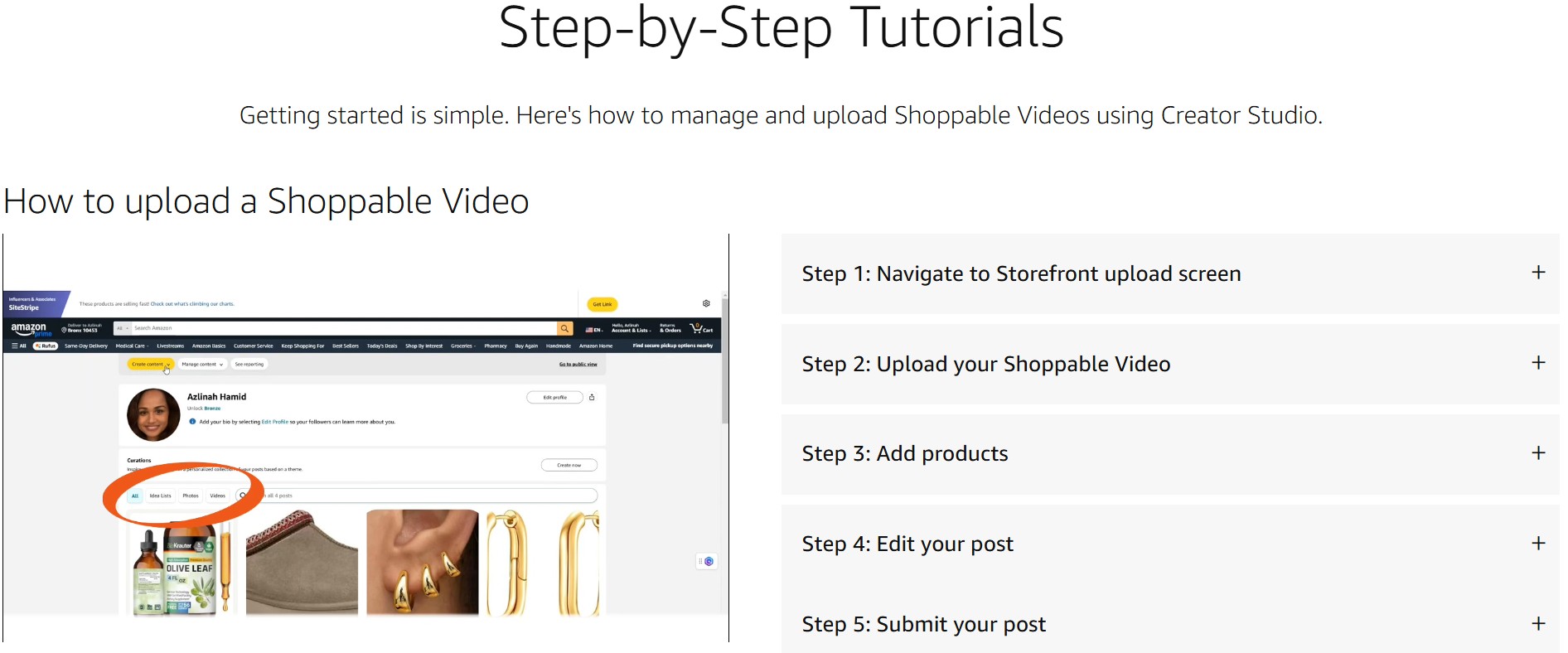
Which Video Commerce Strategies Increase Sales?
Let me say this again. Yes this is a “new” e-commerce frontier, but we’ve also lived with it long enough for some clear patterns to have emerged about what drives results versus what wastes resources. And the spectacularly unsexy but terrifically actionable truth is that basic product demonstration videos deliver the most consistent return on investment for most merchants. They’re cheap to produce, easy to target and deploy, and more importantly, they easily-directly address the primary barrier to online purchases…Uncertainty about products only seen virtually.
So my advice is that simple. If you haven’t moved on video at all or have been relying on your customers to create product demonstration videos, start there. Get every product on video, even if it’s just 30 seconds of you holding it, showing its size and explaining how it works. Use your phone. Use natural light. Focus on clarity over creativity. According to Animoto’s 2024 consumer survey, 96% (yes 96%) of online consumers find videos helpful when they’re making purchasing decisions. So they aren’t there judging production values. They’re trying to understand products.
Once you’ve covered your catalog with basic demonstrations, then sit down with your team and consider where sophisticated video makes sense. If you sell fashion or lifestyle products where context matters, experiment with shoppable videos. If you have a charismatic founder or products that benefit from detailed explanation, try live shopping for product launches or special events. But don’t skip ahead. The fundamentals will drive more value than the flashy innovations
Some Under Discussed Mobile Realities of Video
We’ve all been justifiably at least lowkey obsessed with the impact of mobile on retail generally for years now, but in my experience at least, too few Shopify merchants have really thought through how mobile shopping behaviors will affect their video strategy’s value. Fortunately, this is another area where we have good dispositive data to base our various strategic decisions on.
Like. According to Wistia 75% of video views will happen on mobile devices, but completion rates for mobile views will be 20% lower than they are on desktop. Which again, isn’t because mobile users are younger or have shorter attention spans or anything like that. It’s because they’re usually watching without sound, on much smaller screens, and often in distracting environments besides.
That means you’ll need to make specific production choices. Your videos will need clear visual communication and to work without audio. Text overlays will be essential. You’ll need to film in vertical formats in addition to horizontal (seriously 9:16 aspect ratio videos see 25% higher engagement according to HubSpot). Products need to be shown larger and clearer because customers will be viewing on five-inch screens as well as on 27-inch monitors.
Measuring the Video Commerce Metrics That Matter
Video commerce metrics often get confusing because platforms measure different things differently. Views don’t equal engagement. Engagement doesn’t equal conversion. Conversion doesn’t equal profitability. Understanding what to track helps you optimize what actually matters.
View-through rate (VTR): Start with the basics, the percentage of people who watched your video in its entirety. Wistia’s benchmarks suggest 50% VTR for videos under two minutes is good and 35% for longer content. But VTR alone won’t tell you much. You’ll also need to connect viewing behavior to purchasing behavior. Shopify’s native analytics are gonna fall short here. Sure, they’ll tell you how many times a video was played but not whether those viewers actually purchased anything. To get that, you’ll need either GA4 and GTM with a “proper” event tracking set up or a dedicated video analytics utility.
Then, Conversion rate: The second most important metric to measure will be each video’s conversion rate, i.e. the percentage of each video’s viewers who buy whatever something you’re selling. According to Invideo’s 2024 data, store owners averaging 4-5% conversion rates are doing pretty well. Below 2% suggests content problems. And rates above 7% typically indicate that you aren’t showing your videos to enough people.
Finally, Average Order Value: Your AOV from video viewers versus non-viewers will reveal each video’s true impact. Across platforms, video viewers show 20-40% higher AOV. They’re more confident in their purchases, leading to larger baskets and fewer returns. This will compound each video’s value beyond simple conversion improvements
What This Actually Means for Shopify Merchants
Remember. Video demonstration commerce hasn’t revolutionized e-commerce, but it’s certainly changed. It has evolved because of it, because it raised consumer’s baseline expectations for product presentation. Your customers now expect video. Not having it doesn’t make you unique or thoughtful. It makes you incomplete. The good news is that effective video commerce doesn’t require massive investment or technical sophistication. A store owner with an iPhone, a mic and a halfway decent lighting kit can compete with brands spending thousands on production. And authenticity often outperforms polish. Clarity beats creativity. Usefulness will win over artfulness.
Start simple. Pick your ten best-selling products and create 60-second demonstration videos. Use Shopify’s native video features to embed them in product galleries. Track the conversion rate difference between viewers and non-viewers. Once you prove the model with basic content, consider advanced formats and features. The trajectory is clear. Video will become as standard as product photos, just another baseline requirement for online selling.
The merchants who start now, who build video production into their regular workflow, who treat it as essential rather than optional, will find themselves ahead when that baseline becomes universal. The question isn’t whether to use video anymore. It’s how quickly you can make it integral to your retail operation.
Ok, that’s it for me today. Hope you’re finding tons of value in the resources we’re building and the connections we’re making here on Bold Match! If this post helped clarify video commerce, shoppable videos or livestream selling that’s exactly why we’re here … To help merchants like you implement the strategies that separate good Shopify stores from great ones. As always, if you’ve outgrown what you can handle internally and need vetted Agency Expertise, you know exactly where to find us. Keep building something awesome! – Jay
Frequently Asked Questions (FAQ)
What’s the actual ROI of adding video to product pages?
You’re looking at 20% to 144% improvement in conversion rates, though most merchants land somewhere between 30% and 50% based on Shopify’s internal data and InVideo’s 2024 report. Average order values jump too, usually 20% to 40% higher for people who watch videos. But let me be clear about something. These numbers depend heavily on what you’re selling and how well you execute. Complicated products, technical items, anything that needs explanation? That’s where video really pays off. Basic t-shirts or phone cases? The lift is there but smaller. When you factor in that you can shoot these videos on your phone using Shopify’s free native features, even a 20% bump makes the math work.
Will I need expensive video production equipment or services?
Not. At. All. Your phone is fine. Actually, your phone is probably better than fine if you bought it in the last three years. What actually matters is stuff that costs almost nothing. Good lighting, which sunlight provides for free. Clear audio, which a $30 lapel mic from Amazon solves. A background that doesn’t look like a storage unit exploded. I see merchants dropping five grand on video production before they’ve even tested whether their customers care about video. That’s backward. Shoot some simple videos on your phone first. Prove they move the needle. Then maybe, maybe invest in better production if the numbers support it.
Which video commerce format should I try first?
Product demonstration videos. Not even a close call. They’re cheap, they’re easy, and they work consistently across pretty much every product category. Shoot 30 to 90 seconds showing the thing actually working. Show how big it is compared to common objects. Answer the questions customers always ask. Get every single product on video before you even think about anything fancy. Once that’s done, sure, maybe experiment with shoppable videos if you sell lifestyle stuff. Maybe try live shopping if you’ve got new product launches or someone on your team who doesn’t freeze on camera. But honestly? Most Shopify merchants should just nail product demos and call it a day.
How do Shopify’s native video features compare to paid apps?
Shopify’s native video handles everything most merchants need. Upload videos up to 256MB or 10 minutes straight to product pages. Automatic optimization for different devices. Zero additional cost. It just works. The paid apps like VideoWise (runs you $29 to $199 monthly) or Tolstoy ($19 to $499) give you the fancy stuff. Shoppable tags, detailed analytics about who watches what, interactive features that let viewers choose their own adventure. My advice? Start native. Use it until you hit a wall where you specifically need something it can’t do. Then look at apps. Most merchants never hit that wall.
What’s the best length for product videos?
It’s certainly debatable but somewhere between 30 seconds and 2 minutes, with the sweet spot sitting right around 60 to 90 seconds according to both Vidyard and Wistia. Here’s the thing though. Only about half your viewers will watch the whole thing no matter how short you make it. So you front-load the important stuff. Show the product working in the first 10 seconds. Save the detailed features for the back half. Match the length to complexity too. A simple product needs maybe 30 or 45 seconds. Something technical might justify 2 or 3 minutes. But if you’re going past 2 minutes, you better have a really good reason.
Should I host videos on YouTube or directly on Shopify?
Host on Shopify for product videos. Better page load speeds, customers stay on your site, cleaner analytics. YouTube makes sense for content marketing videos, the stuff you want people to stumble across while researching. But your actual product videos? Those live on your store. The only time YouTube makes sense is if you’re constantly bumping into Shopify’s file size limits, though honestly, if you’re having that problem, you’re probably not compressing your videos properly.
How much should I budget monthly for video production tools?
Start with zero dollars beyond your time. I’m serious. Phone plus natural light plus Shopify native video equals everything you need to test whether video works for your products. You’ll know within 30 days if it’s moving the needle. Once it proves itself, maybe you spend $50 to $200 monthly on apps if you need better analytics or shoppable features. Production scales with your ambitions and your results. Basic demos cost nothing. Getting someone on Fiverr to edit might run $20 to $100 per video. Live shopping? Now you’re talking $500 to $5,000 monthly once you factor in everything. But each spending bump should be justified by results, not hopes.
What conversion metrics should I track to measure success?
Three numbers matter. First, how many people actually finish your videos? You want about 50% completion for anything under 2 minutes. Second, how do viewers convert compared to non-viewers? Video viewers should convert at least twice as well, maybe three times. Third, what’s the average order value difference? Video viewers typically spend 20% to 40% more. If you’re not seeing improvements like these within 60 days, your videos probably aren’t very good. And usually that means they’re not clear enough or useful enough, not that they need better production value. Fix the content before you fix the camera.