
What Are Shopify Experts and What Do They Do?
Written and edited by: Eric

Guess what gang. We’re trying something new on the blog today. You’re getting both of us. I’m Jay Myers and typing from somewhere else in Winnipeg is Eric Boisjoli and we’re collaborating on this one because the late (replaced not lamented) Shopify Experts Marketplace still presents a peculiar problem. Search for “Shopify Expert” and you’ll find everyone from freelance web developers in Kanpur to full-service development agencies in Kensington Market (and in the Certified Service Partner Program) claiming the title. And, they aren’t all wrong to.
You see. Even Google’s still struggling with the terminology and routinely conflates the now slang of referring to individual consultants and freelance specialists as Shopify Experts with actual Select, Plus Premier and Platinum Partner Agencies in search results. The confusion isn’t accidental. It’s the natural result of how the certification ecosystem evolved from an open marketplace into something structured, but that’s too often fundamentally misunderstood by the online merchants who need the marketing, design and development services most.
Now, there’s a category fraud aspect to all of that where retailers think they’re hiring a “certified” expert, but half the time they’re getting someone who watched a few YouTube tutorials but the real issue isn’t the bad actors. It’s that the combination of conflation and confusion plus bad actors has made it hard for busy store owners to see what the Experts Program, actually certified, and what “Expert” still means.
But. Understanding what Shopify Experts are, what they do, and how the certification program actually worked is essential for every up and coming brand ready to scale beyond their do-it-yourself phase. So we’re gonna talk through it in the parlance you’ll encounter it in.
 Why the Definition of “Shopify Expert” Matters
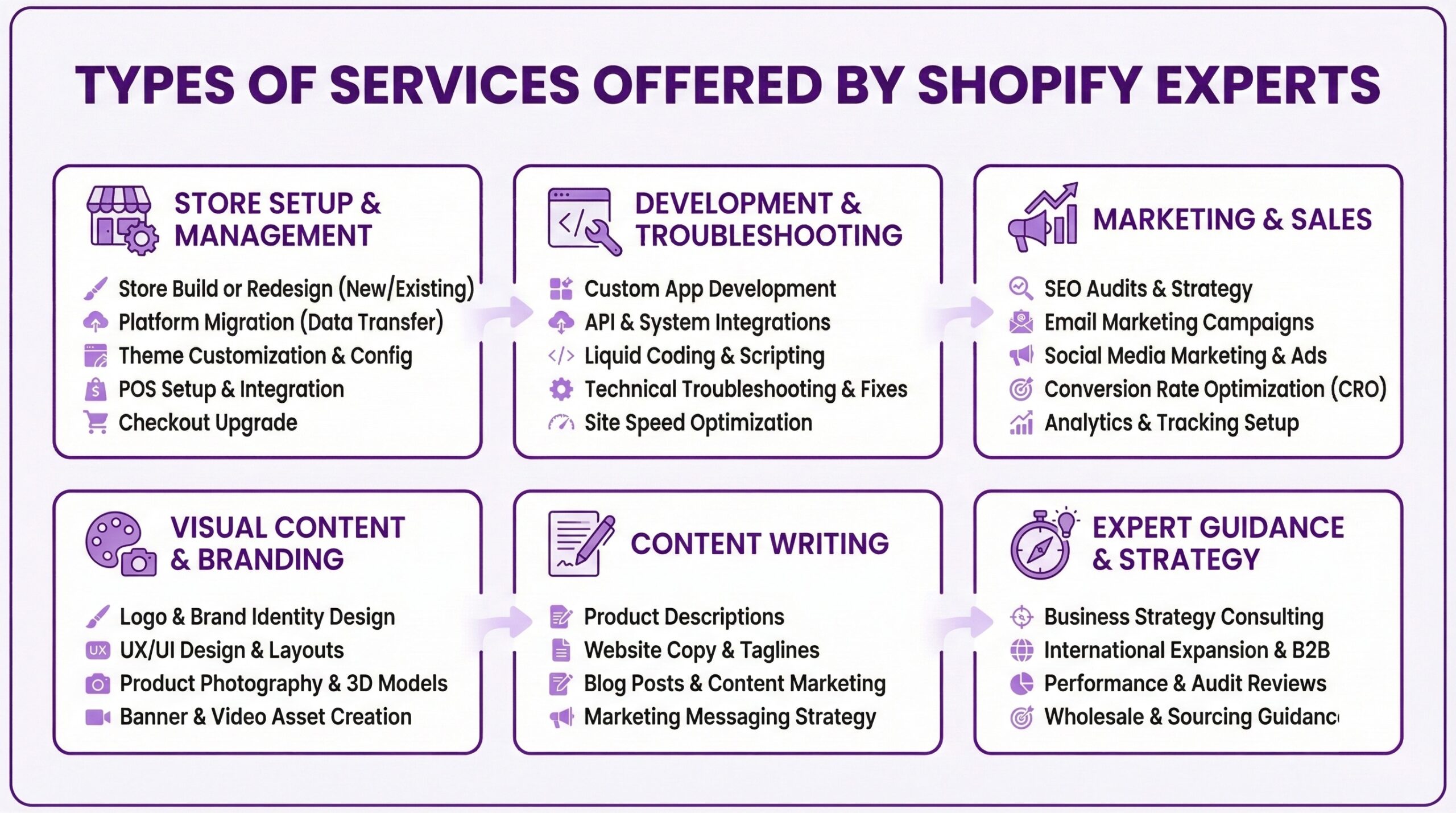
So, who are Shopify experts? Here’s the simple version. They’re individuals or companies vetted and listed in Shopify’s official directory for providing professional services to merchants. The less simple version responsible for at least some of the aforementioned confusion involves understanding that this program has undergone significant evolution since its original inception, evolving from being a more or less open system to one with actual requirements and standards.
Since early 2025, being certified as an Expert has meant having demonstrable experience with the e-commerce platform, a portfolio of applicable projects, and an ability to demonstrate having maintained certain quality standards with client reviews. Shopify has introduced performance tiers, specialization badges, and stricter enforcement of the quality above standards. The days of fishing freelancers being able to declare themselves experts are over (at least they are within Shopify’s official marketplace); though it still contains a wide assortment of technical specialties.
More importantly, for any online merchants looking to scale, several core technical roles matter most. And while the categories may seem a bit arbitrary, and aren’t at all grouped or organized the way that we would group or organize them. Taken together they do represent the fundamental competencies required to grow and seriously build out your ecommerce operation.
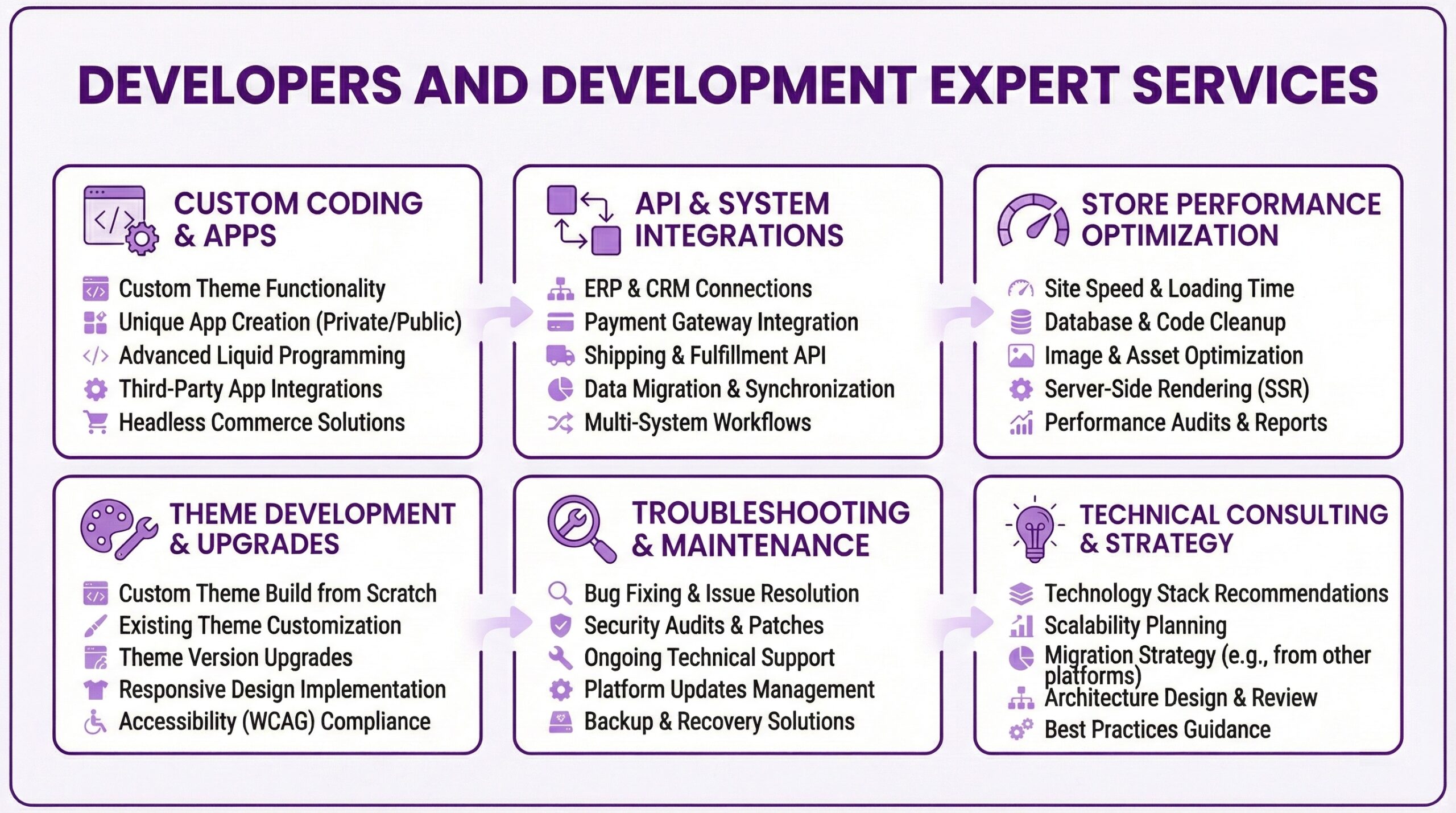
Web Developers and Development Experts
Shopify developers form the technical backbone of the Expert ecosystem, but “developer” has become one of those terms that means everything and nothing. Front-end, back-end, full-stack aren’t just resume keywords. They’re completely different skill sets. The front-end developer who gave your store that pretty facelift might not know the first thing about building the custom wholesale portal you need. And the back-end developer who can build that portal? They might deliver something that works perfectly but looks like it was designed in like 2002. Front-end developers operate in an entirely different realm from back-end developers (like Eric here . ) who build custom applications. Genuine full-stack development expertise remains relatively rare
Most developers start with theme customization. It’s accessible, there’s immediate visual feedback, and stores always need it. These developers work with Liquid, Shopify’s templating language, plus the usual web standards. The experienced ones have learned that merchants always underestimate how their “small tweaks” affect site performance. They’ve seen enough stores tank their conversion rates with too many apps and custom features to know when to push back.
Custom app developers operate at a different level because building custom applications means understanding modern frameworks, API architecture, and multiple programming languages. It also means having at least some understanding of business logic. I mean. When a retailer says they only need “simple inventory sync,” app developers need to know to ask about edge cases, error handling and figure out what’ll happen if (aka when) the WiFi drops during a critical update
Then you’ve got integration specialists. The developers who make different systems talk to each other, which sounds straightforward until you realize that your inventory system thinks a product variant is one thing, Shopify thinks it’s something else, and your ERP has its own opinion entirely. Integration specialists spend their days mapping fields, handling authentication, and figuring out why that one webhook that worked perfectly well yesterday is suddenly failing today.
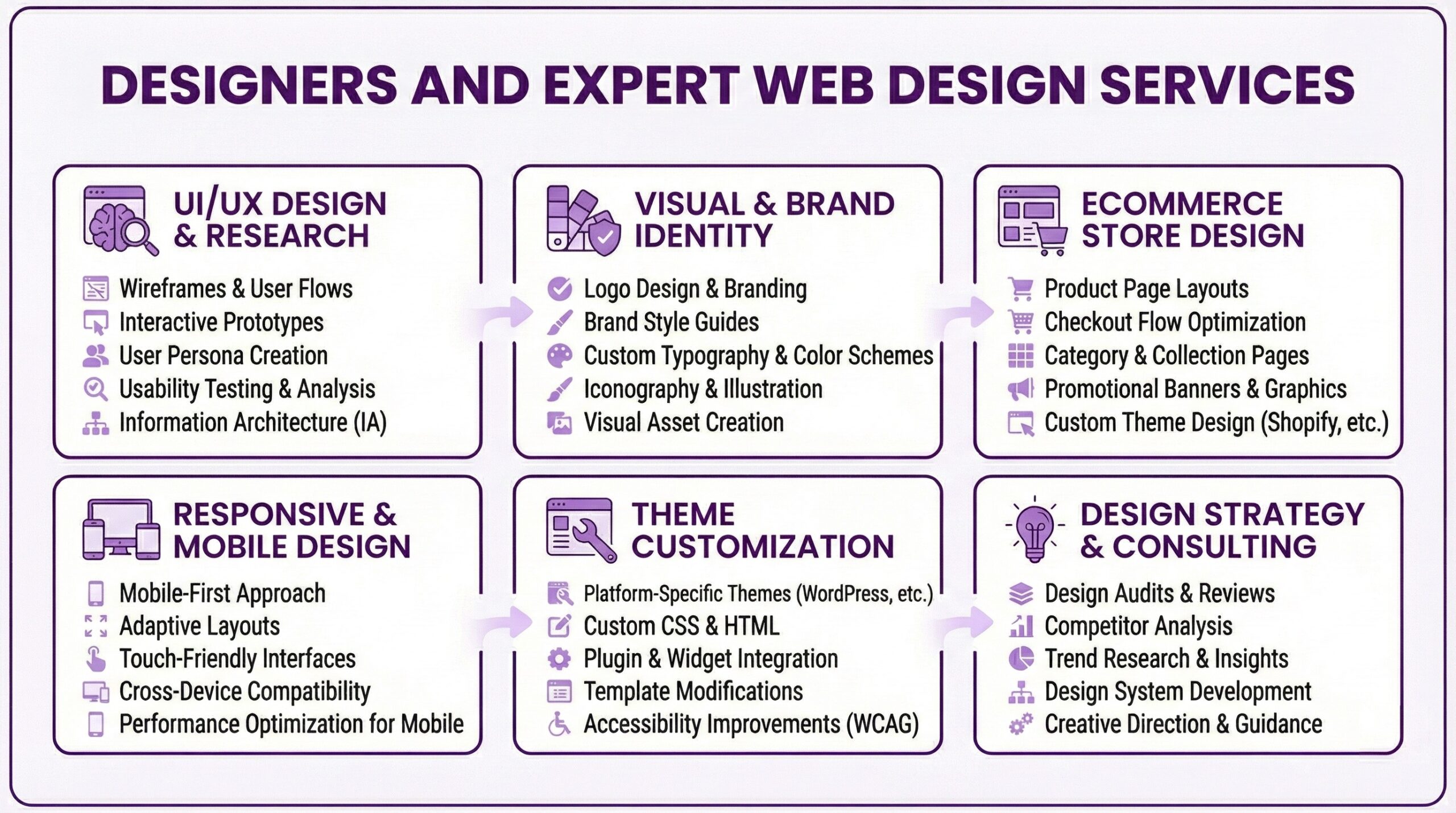
This is one of those business buzzwords sayings things that we probably hear too often, but e-commerce design really does sit at the intersection of art and (well) e-commerce. So the best Shopify design experts operate on both sides of that equation. They’re not just making online stores pretty. They’re engineering visual experiences that guide consumers toward the checkout button. These specialists handle everything from theme selection and customization to complete visual overhauls, but the good ones start with user research rather than mood boards. They understand mobile-first design isn’t optional when most Shopify traffic comes from phones. They know that gorgeous hero images mean nothing if they tank your page load times. And they’ve learned through painful experience that retailers often fall in love with design elements that actively hurt conversion rates. The experienced design experts will push back when your “creative vision” conflicts with what actually makes customers buy. That tension between looking distinctive and performing well? Navigating it is basically the whole job.
e-Commerce Platform Migration Experts
Store migration has become its own specialized discipline. Moving from WooCommerce, Magento, or BigCommerce to Shopify isn’t just exporting and importing data. It’s archaeology meets data science, requiring experts with both technical skills and fastidious project managers.
The technical challenges go way beyond moving products and customers between databases. You’re preserving SEO equity through URL mapping, maintaining customer histories, reconciling different inventory structures, and handling dozens of small compatibility issues. Password migration alone can be a nightmare since most big e-commerce platforms hash them differently.
It sounds like a lot to expect but, good platform migration specialists have contingency plans for every possible failure point. And what really separates the best migration experts from the rest is their process. They know to audit everything before starting, create detailed mapping documents, run test migrations, and always have rollback plans. They understand store owners often underestimate how much cleanup their data needs and how long proper testing can take.
Site Auditors and Performance Optimization Experts
Site speed has spawned its own expert subspecialty, and for good reason. These specialists audit online stores for performance bottlenecks, optimize image delivery, refactor inefficient code, and implement CDNs. They treat Core Web Vitals as business metrics, not just technical scores. And the thing about performance optimization is that like SEO it’s never really done. Every custom app, every custom feature, every custom campaign adds its weight to your store.
Good performance specialists know merchants need education as much as implementation. They teach their clients why that gorgeous hero video might be costing them thousands in lost sales, why those unoptimized product images cost precious seconds even on fast connections.
These experts bring a specific mindset to their work. They see a 100-millisecond improvement as worth pursuing. They know the research (like Akamai’s study showing 7% conversion loss per second of delay) and use it to justify what will only seem like an obsessive attention to detail
Shopify’s Technical e-Commerce SEO Experts
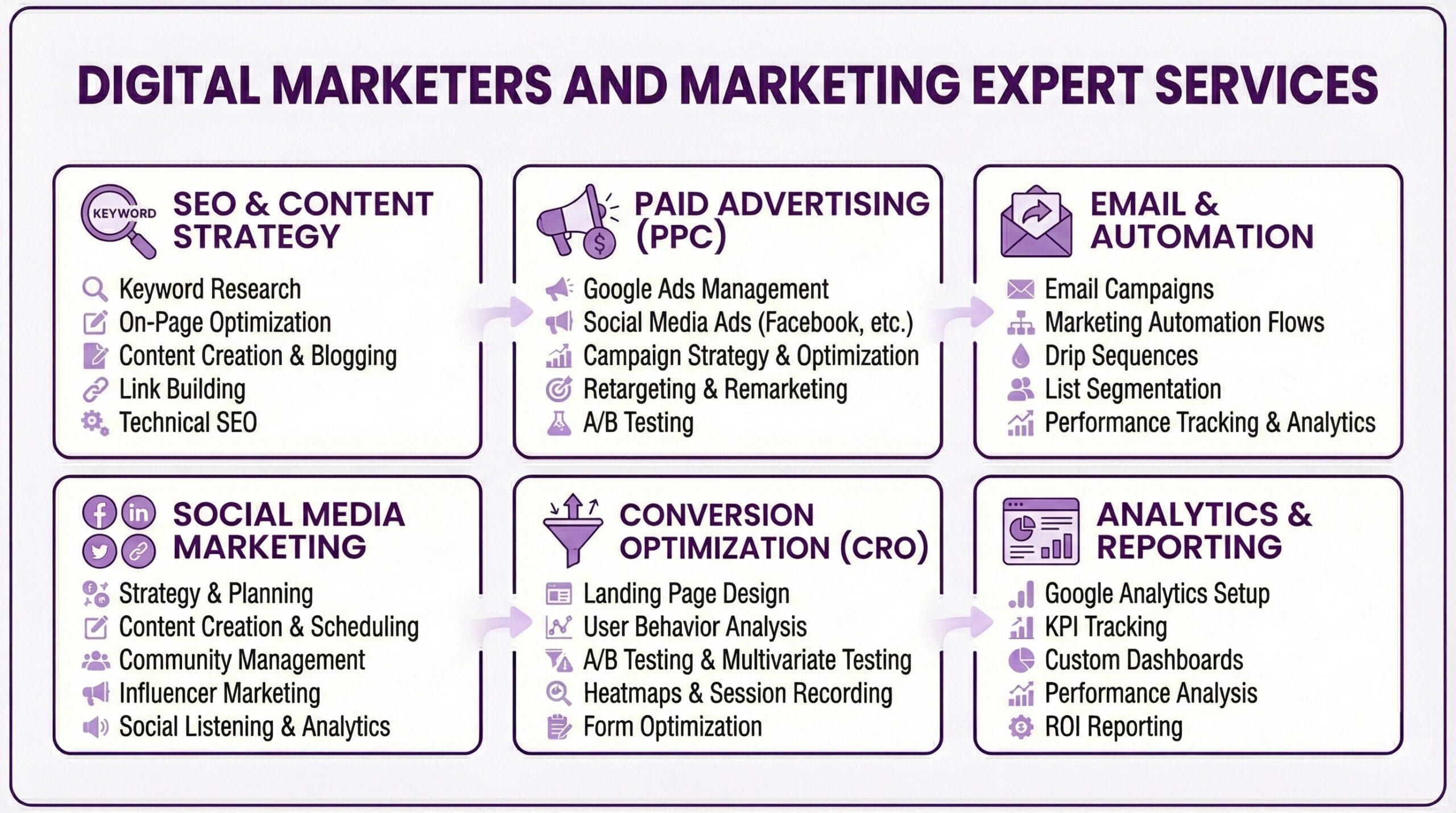
While many marketing agencies claim e-commerce SEO expertise, technical optimization for Shopify typically requires platform-specific knowledge that general practitioners often lack. Shopify specialized search experts understand Shopify’s URL structure limitations, its canonical tag logic, and how to successfully implement (increasingly necessary) structured data deployments despite the platform’s built-in constraints. The platform has built-in SEO features, but it also has limitations that require creative workarounds. Technical SEO specialists know when to use apps versus custom code, how to optimize site architecture despite Shopify’s rigid structure, and why certain seemingly simple SEO tasks are actually impossible on the platform.
What makes Search Engine Optimization for Shopify stores particularly challenging for experts is that they work within guardrails. They can’t just edit your robots.txt file whenever they want. They can’t create custom URL structures for everything. So good technical SEO specialists know these limitations cold and have developed strategies to maximize performance within them.
Web Designers and Shopify Design Experts
This is one of those business buzzwords sayings things that we probably hear too often, but e-commerce design really does sit at the intersection of art and (well) e-commerce. So the best Shopify design experts operate on both sides of that equation. They’re not just making online stores pretty. They’re engineering visual experiences that guide consumers toward the checkout button. These specialists handle everything from theme selection and customization to complete visual overhauls, but the good ones start with user research rather than mood boards. They understand mobile-first design isn’t optional when most Shopify traffic comes from phones. They know that gorgeous hero images mean nothing if they tank your page load times. And they’ve learned through painful experience that retailers often fall in love with design elements that actively hurt conversion rates. The experienced design experts will push back when your “creative vision” conflicts with what actually makes customers buy. That tension between looking distinctive and performing well? Navigating it is basically the whole job.
The Evolution of Shopify’s “Expert” Standards
We’ve been known to have some fun at its expense, but honestly, Shopify’s Experts program really has come a long way since the early days we’re referencing when we joke. Shopify now requires proof of expertise through completed projects, maintains quality scores that’re based on merchant reviews, and has introduced specialization badges to signal specific competencies.
That tiering system is their attempt to separate “basic” competence from “exceptional” expertise.
These days experts achieve different status levels based on how many projects they’ve tackled, the client satisfaction scores they’ve received, and even the revenue they’ve generated. No. It’s not perfect, but it certainly beats the old binary system where you were either certified or not. Shopify’s enforcement regime has gotten stricter too. Experts who consistently receive poor client reviews or fail to maintain a minimum level of activity are often removed from the directory.
Confusing Shopify Experts and Shopify Partners
Remember, we started typing this because the distinction between Experts and Partners might be the single most misunderstood aspect of Shopify’s entire ecosystem. Even Google can’t quite suss it all out, regularly mixes Partner agency results with Expert searches and vice versa.
So. Here’s how it breaks down: Shopify Partners includes anyone in the ecosystem who refers clients, builds apps, or designs themes. It’s free to join and includes agencies, developers, designers, marketers, and affiliates. Literally thousands of businesses are Shopify Partners. It’s essentially or rather not entirely unlike an entry-level membership card invite to their ecosystem.
Shopify Experts on the other hand are the lightly “vetted” subset of Partners who’ve met specific requirements and maintain their standing via performance metrics. All Experts are Partners, but not all Partners are Experts. Like squares and rectangles. The distinction matters because Expert status implies at least some vetting (not the vetting and vouching for we do, but some) and ongoing quality control that basic Partner status doesn’t. Making things more confusing, is that there’s also the Shopify Plus Partner program for agencies that serve enterprise merchants.
These Partners (who may or may not also be Experts) work with Shopify’s enterprise platform and maintain minimum revenue thresholds. The overlapping terminology would confuse anyone.
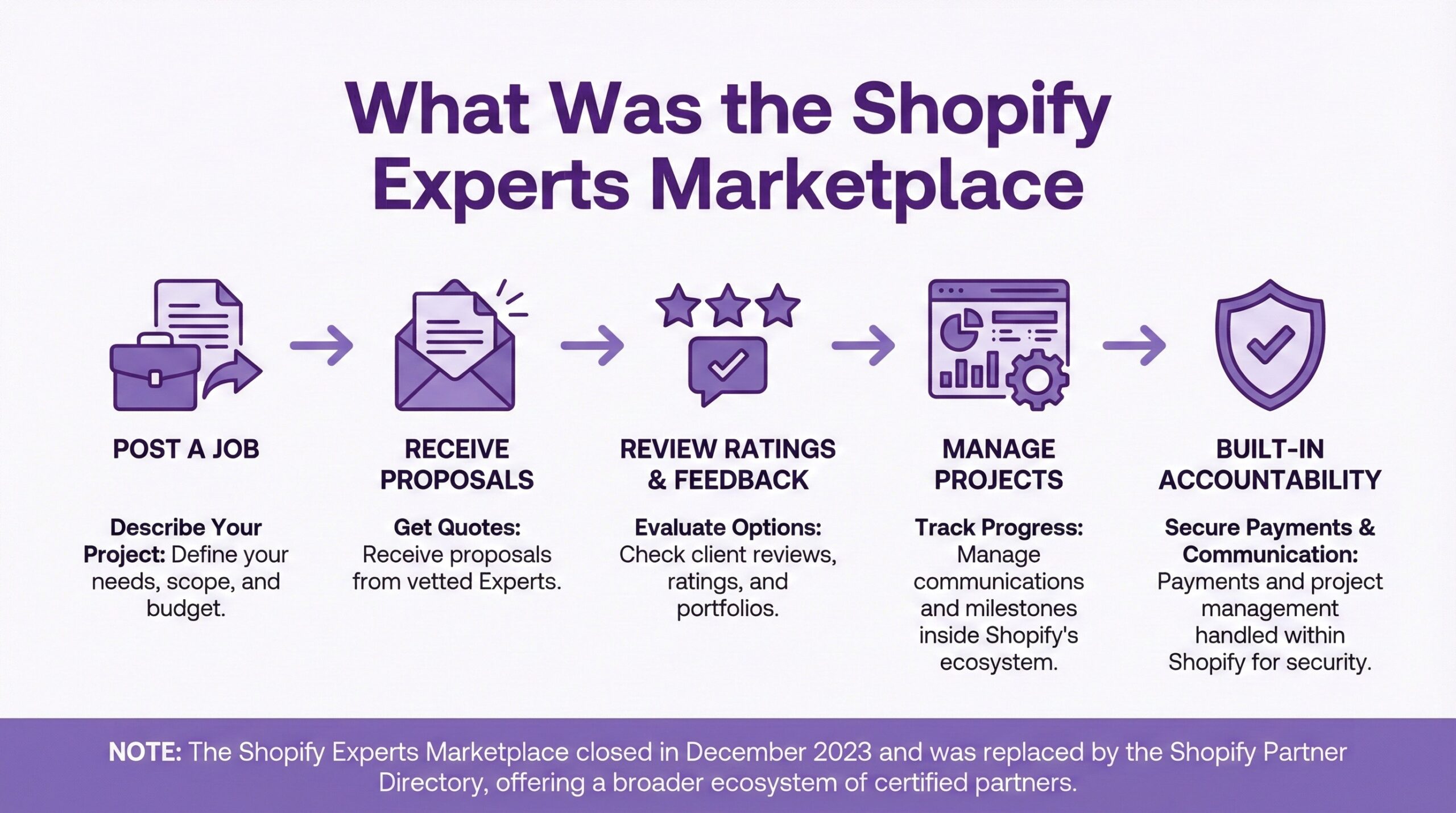
Making Sense of Shopify’s Old Expert Marketplace
For merchants navigating this ecosystem, understanding the differences won’t really matter until they’re trying to find an expert then hire an expert. Need custom development? You want an Expert with proven development capabilities, not some rando with a website who’s successfully applied for partner status. Need a theme redesign? You’ll probably wanna know if the various candidate’s expertise also includes User Interface research and User Experience optimization.
The directory itself will also require strategic navigation. Don’t default to Shopify’s recommended ranking. Sort by rating and review count. Read the actual reviews, not just star ratings. Look for experts who specialize in your specific challenge rather than generalists claiming every possible skill. Geographic location matters less than many think. Great Shopify development happens remotely every day. So. Limiting your search to local experts means missing out on potentially better options. Time zone compatibility and communication skills will matter more than proximity.
Understanding the Costs of Hiring Shopify Experts
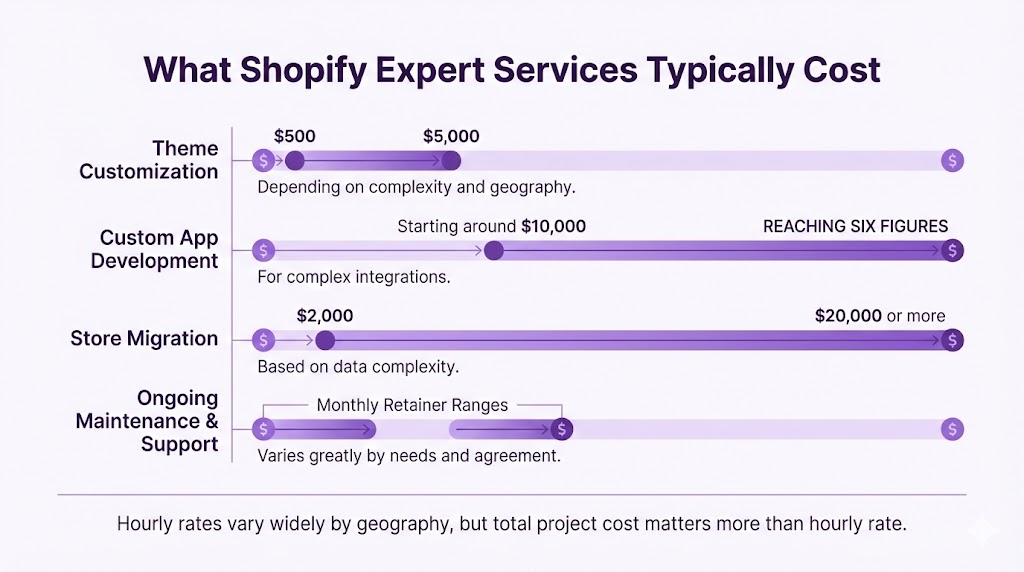
Pricing in the Expert marketplace varies wildly. A theme customization might cost $500 from an Eastern European developer or $5,000 from a US agency. Neither price guarantees quality. There are excellent developers at both ends of the spectrum and questionable ones throughout.
That said. Understanding what drives pricing will help you make better decisions. Complex custom development will cost more than theme modifications. That makes sense. Experts who include strategy and consultation provide different value than those who just execute specs. Rush timelines cost more. After-hours support costs more. All reasonable, but store owners need to factor these in upfront.
The key will be matching the expertise level to your actual needs. Afterall. You don’t need your Lucid Air’s oil changed or a charging station for your Volvo S60. Similarly, you don’t need a high-end agency to install a reviews app. But when you’re rebuilding your entire checkout flow or integrating with enterprise systems, that’s when premium expertise pays for itself.
 Hire Vetted Shopify Experts, Developers and Designers
They aren’t us. They don’t have our personalized matching process. But. The Shopify Expert ecosystem keeps evolving toward greater professionalization. They have introduced more sophisticated vetting, specialization tracks and even ongoing education requirements. Serious professionals are distinguishing themselves through additional certifications, detailed client case studies, and documenting their results. Challenges remain. Quality control at that scale is hard. Geographic disparities in standards and pricing create confusion. The program lumps individual freelancers and full agencies under the same umbrella, which doesn’t help with merchant misunderstanding.
But compared to three years ago? The improvement is substantial. The wild west days are mostly over. Bad actors still exist, but they’re easier to identify. Good Experts have more ways to prove their value. Merchants have better tools for evaluation. For merchants, success means understanding both the current state and the trajectory of this ecosystem. The Expert program provides useful signals about platform competence, but it shouldn’t be your only criterion. Technical skills, communication ability, project management capability, and cultural fit all matter.
The Shopify Expert marketplace isn’t a perfect marketplace, but it is maturing. And understanding what experts actually are, what they do, how they differ from partners, how the program works and how it doesn’t work, will help you make better hiring decisions. In an ecosystem where they all claim expertise, knowing how to identify capabilities can become a competitive advantage. Have a good one! – Eric & Jay!
Legacy Shopify Expert Services Translated Into Shopify’s Current Partner Tiers
A comprehensive reference for e-commerce merchants navigating Shopify’s evolved experts ecosystem
|
Shopify Design Services |
What It Involves |
Legacy Expert Type (Pre-2024) |
Current Service Partner Tier |
Strategic Considerations |
|---|---|---|---|---|
|
UI/UX Design |
User interface design, user experience research, wireframing, prototyping, and conversion optimization |
Design Expert, UX Specialist |
Select Partner, Plus Partner |
Design is subjective but conversion isn’t. Ask for case studies with actual metrics. Good designers push back on merchant requests that hurt UX. Mobile-first thinking is non-negotiable when 60-70% of traffic is mobile. |
|
Visual Brand Identity |
Logo design, color systems, typography, photography direction, and brand guidelines |
Design Expert, Brand Specialist |
Select Partner, Plus Partner |
Branding work often happens outside Shopify ecosystem entirely. Many brand specialists aren’t Shopify-specific. Coordination between brand agency and Shopify implementation partner adds complexity. |
|
Store Design Overhaul |
Complete visual redesign including homepage, collection pages, product pages, and checkout experience |
Design Expert |
Plus Partner, Premier Partner |
Design and development must work together. Gorgeous mockups mean nothing if they tank page load times. Verify the partner handles both design and implementation, or has established workflows between specialists. |
|
Shopify Marketing Services |
What It Involves |
Legacy Expert Type (Pre-2024) |
Current Service Partner Tier |
Strategic Considerations |
|---|---|---|---|---|
|
Technical SEO |
URL structure optimization, structured data implementation, canonical tags, site architecture, Core Web Vitals |
Marketing Expert, SEO Specialist |
Select Partner (standard), Plus Partner (advanced) |
Shopify has SEO limitations that require platform-specific workarounds. Generic SEO agencies often struggle. Ask specifically about Shopify’s robots.txt constraints, URL structure rigidity, and schema implementation approaches. |
|
Email Marketing Setup |
Klaviyo/Omnisend/Mailchimp integration, flow automation, segmentation strategy, template design |
Marketing Expert |
Select Partner, Plus Partner |
Email platform expertise matters more than Shopify expertise here. Most partners subcontract or specialize in specific platforms. Verify experience with your chosen email provider specifically. |
|
Paid Advertising |
Meta Ads, Google Ads, TikTok Ads strategy, pixel/tag implementation, conversion tracking |
Marketing Expert |
Select Partner, Plus Partner |
Paid media is often handled by specialized agencies outside Shopify’s Partner ecosystem. Technical implementation (pixels, conversion APIs) may require Shopify development expertise separately. |
|
Conversion Rate Optimization |
A/B testing, user behavior analysis, checkout optimization, landing page optimization |
Marketing Expert, CRO Specialist |
Plus Partner, Premier Partner |
CRO requires both analytical and development skills. Testing tools have Shopify-specific quirks. Ask about their testing methodology and statistical rigor. Beware of providers who claim massive lift percentages without proper controls. |
|
Shopify Migration Services |
What It Involves |
Legacy Expert Type (Pre-2024) |
Current Service Partner Tier |
Strategic Considerations |
|---|---|---|---|---|
|
Platform Migration |
Moving from WooCommerce, Magento, BigCommerce, Squarespace, or custom platforms to Shopify |
Migration Specialist, Development Expert |
Plus Partner (standard), Premier Partner (complex) |
Migration complexity varies enormously based on source platform, data volume, and customization level. URL mapping for SEO preservation is often underestimated. Always require test migrations and rollback plans. Budget 25-50% contingency. |
|
Data Migration |
Products, customers, orders, and historical data transfer with integrity verification |
Migration Specialist |
Select Partner, Plus Partner |
Customer password migration is often impossible (platforms hash differently). Order history imports have limitations. Verify what data can actually transfer before committing. Plan customer communication for password resets. |
|
Enterprise Migration |
Large-scale migrations involving multiple storefronts, complex integrations, and high data volumes |
Migration Specialist (Senior), Enterprise Consultant |
Premier Partner, Platinum Partner |
Enterprise migrations are projects measured in months, not weeks. Require dedicated project management, staged rollouts, and extensive testing. Platinum partners exist for exactly this complexity level. |
|
Shopify Store Setup and Operations Services |
What It Involves |
Legacy Expert Type (Pre-2024) |
Current Service Partner Tier |
Strategic Considerations |
|---|---|---|---|---|
|
New Store Setup |
Initial store configuration, payment processing, shipping rules, tax settings, basic theme setup |
Setup Expert, Consultant |
Registered Partner, Select Partner |
This is entry-level work most merchants can DIY. Professional setup mainly saves time. Useful for merchants who’d rather focus on product and marketing. Ensure handoff includes documentation. |
|
B2B Configuration |
Wholesale channel setup, customer-specific pricing, volume discounts, B2B checkout customization |
Development Expert, B2B Specialist |
Plus Partner, Premier Partner |
Shopify’s native B2B features (on Plus) are relatively new. Many implementations still require apps or custom development. Ask specifically about Shopify’s B2B features versus third-party solutions. |
|
International Expansion |
Multi-currency setup, Markets configuration, translations, international payment methods, duties/taxes |
Consultant, Setup Expert (Advanced) |
Plus Partner, Premier Partner |
International complexity compounds quickly. Each market may need different payment providers, shipping carriers, and tax configurations. Shopify Markets simplifies but doesn’t eliminate this complexity. |
|
Performance Optimization |
Site speed auditing, Core Web Vitals improvement, app rationalization, image optimization |
Development Expert, Performance Specialist |
Select Partner, Plus Partner |
Performance is ongoing, not one-time. Every app and customization adds load. Best partners educate merchants on performance tradeoffs. Ask for before/after Lighthouse scores from previous clients. |
|
Shopify Strategic Services |
What It Involves |
Legacy Expert Type (Pre-2024) |
Current Service Partner Tier |
Strategic Considerations |
|---|---|---|---|---|
|
e-Commerce Strategy |
Business model consultation, growth planning, technology roadmapping, competitive analysis |
Consultant |
Plus Partner, Premier Partner |
Strategy work requires business acumen beyond technical skills. Partners at higher tiers have seen more business models succeed and fail. Ask about their experience with businesses at your stage and scale. |
|
Shopify Plus Consulting |
Plus-specific features, checkout extensibility, B2B capabilities, expansion stores, advanced customization |
Enterprise Consultant, Plus Specialist |
Premier Partner, Platinum Partner |
Plus has features most partners never touch. Checkout extensibility, Functions, and advanced scripting require specialized knowledge. Platinum partners have the deepest Plus experience. |
|
Ongoing Retainer Support |
Dedicated hours for maintenance, updates, small enhancements, troubleshooting, and consultation |
Any Expert category |
Any Partner tier |
Retainer relationships work best with clearly defined scope. Ask about response time SLAs, how unused hours roll over, and what falls outside retainer scope. Some partners require retainers post-launch; factor this into project costs. |
Partner Tier Quick Reference: Registered (entry-level) → Select ($15K-$35K projects) → Plus ($35K-$150K) → Premier ($150K-$350K) → Platinum ($350K+, invitation only)
Frequently Asked Questions (FAQ)
What’s the Difference Between Shopify Partners and Shopify Experts?
Every Shopify Expert is also a Partner, but most Partners aren’t Experts. Think of it this way. Partner is basically anyone who signed up for Shopify’s free partnership program. That includes affiliates hawking discount codes, developers building apps, designers selling themes, agencies of every size and quality. Thousands and thousands of them. Expert status means you’ve actually proven you can deliver. You need real project experience, decent client reviews, and Shopify has to vet you. So Partner is the club membership, Expert is the certification that you know what you’re doing.
What Types of Specialist Services Do Shopify Experts Provide?
Shopify Experts are specialists who offer professional services across a few categories. For instance. Development experts handle custom coding, app building, and technical integrations. Theme experts customize store appearance and user experience. Migration experts move stores from platforms like WooCommerce, Magento, or BigCommerce while preserving data and SEO equity. Performance experts optimize site speed and Core Web Vitals. SEO experts handle platform-specific search optimization. Store setup experts configure new stores from scratch including payment systems and product organization. Some experts specialize narrowly in one area while others offer services across multiple categories.
How Much Should I Expect to Pay for a Shopify Expert Developer?
 The range is wild and geography matters more than you’d think. Solid web devs based in Eastern Europe or South Asia might charge $50 to $150 hourly for theme customization. The same work from a Canadian, U.S. or U.K. based firm might run $150 to $300 hourly. Custom app development? That’s a different world entirely. Even simple apps can cost around $10,000. Complex custom integrations easily hit as much as six figures. But hourly rates don’t really tell you as much as you’d think. What matters is total project cost, realistic timelines, and whether they’ve successfully built exactly what you need before. A $300/hour developer who nails it in 10 hours beats a $50/hour developer who takes 100 hours and still doesn’t get it right.
When Should I Hire Shopify Experts Versus Doing it In-House?
Honestly. That decision really does depend on the complexity of the work you need and your internal technical comfort level. I mean. Basic store setup, simple theme adjustments, and app installations are manageable for most merchants willing to learn. So. Consider hiring an expert when you need custom functionality beyond standard Shopify options, when migrating from another platform with significant data and SEO equity at stake, when technical issues are affecting your conversion rates, or when you need integrations with external systems like ERPs or custom inventory management. The cost of an expert often pays for itself when DIY mistakes would mean lost sales or expensive fixes later.
Do I Need a Shopify Expert or Would Any Web Developer Work?
Depends what you’re building. Need theme customization? Store migration? Deep integration with Shopify’s weird inventory system? You want someone who knows Shopify’s specific quirks. A Shopify Expert has already learned that you can’t just modify robots.txt whenever you want, that Shopify’s URL structure has non-negotiable limitations, that certain “simple” changes require elaborate workarounds. But if you need a custom calculator or some JavaScript functionality that could run on any website? A talented general developer might actually be better and cheaper. Platform expertise matters most when you’re working within platform constraints.
What should I look for beyond Expert certification when hiring?
The certification just means they know Shopify. It doesn’t mean they communicate well, hit deadlines, or understand business. Which is partly why we build BOLD MATCH. So. Look at their portfolio for projects like yours, not just pretty sites in general. Read reviews for mentions of communication problems or timeline issues, not just star ratings. Ask them about their process. How do they handle scope creep? What happens after launch? Can you talk to recent clients who had similar projects? The best developers provide strategic thinking, not just code execution. They’ll tell you when your idea is unnecessarily complex or suggest simpler solutions that accomplish the same goal.
Are Shopify Plus Certified Partners the same as Shopify Experts?
Completely different programs with confusing similar names. Shopify Plus Partners work specifically with Shopify’s enterprise platform. They handle the big accounts, maintain minimum revenue requirements, and generally operate at a different scale. Some agencies have both certifications, but they’re serving different markets. Plus Partners typically won’t touch smaller merchants. It’s not snobbery, it’s economics. Their overhead and processes are built for $100K+ projects. If you’re not on Shopify Plus or planning to be, Plus Partners probably aren’t what you need.
What’s the Difference Between Front-End and Back-End Shopify Developers?
Front-end developers work on what e-commerce consumers actually see on your Shopify store. They’re the web devs that handle theme customization, visual design, user interface improvements, and anything involving Shopify’s Liquid templating language plus standard web technologies. Back-end developers build what runs behind the scenes. They create custom applications, handle API integrations, connect external systems, and write server-side code. Full-stack developers do both, but genuine full-stack expertise is relatively rare. A front-end developer who made your store look beautiful might not know how to build the custom wholesale portal you need, and the back-end developer who can build that portal might deliver something that looks like it was designed back in 2002.How Long Does a Shopify Store Migration Usually Take?
Honestly. The timeline depends on data complexity, the source platform, and how much cleanup your existing data needs. Simple migrations with clean data might take two to four weeks. Complex migrations involving large product catalogs, extensive customer histories, custom functionality recreation, and careful Search Engine or Generative Engine preservation can take two to three months or longer. Good migration specialists always run test migrations before the actual move and build in time for thorough testing. Retailers often underestimate how much data cleanup is required before migration can begin and how long proper testing can take afterward.
What questions should I ask before hiring a Shopify Expert?
That list is long enough to be its own blog post (💡) but some essential questions would include … “Can you show me 3 live stores you’ve built with similar requirements?”, “What’s your typical project timeline and what causes delays?”, “How do you handle scope changes mid-project?”, “What happens after launch—do you provide support?”, “Can I speak with 2 clients who had similar projects?”, “What’s your development process and how often will we communicate?”, “Do you provide training on managing the features you build?”. Their answers reveal process maturity, communication style, and whether they’ve actually done this before.
How do I know if a Shopify Expert is legitimate?
You can verify an “expert” certified service partner’s legitimacy through a few checkpoints, for instance … You can confirm their Shopify Partner status in the official directory, review their portfolio for live store examples (not just mockups), contact 2-3 recent clients directly, check if they have Shopify certification badges for their claimed specialties, and verify their company registration if working with an agency. Red flags include: no verifiable past projects, requests for full payment upfront, unwillingness to provide references, or promises that sound too good (like guaranteed #1 rankings or 500% conversion increases).
Can Shopify Experts access my store admin and payment info?
Yes but no in the way you probably mean that. You see. Shopify Experts receive limited staff access with permissions YOU control. They cannot access your payment information, customer payment details, or change your store ownership. You grant specific permissions (like theme editing or app installation) through Shopify’s Staff Accounts system. Best practice: Only grant the minimum permissions needed for their work, remove access when the project completes, and never share your store owner login credentials—legitimate experts will never ask for this.
 The range is wild and geography matters more than you’d think. Solid web devs based in Eastern Europe or South Asia might charge $50 to $150 hourly for theme customization. The same work from a Canadian, U.S. or U.K. based firm might run $150 to $300 hourly. Custom app development? That’s a different world entirely. Even simple apps can cost around $10,000. Complex custom integrations easily hit as much as six figures. But hourly rates don’t really tell you as much as you’d think. What matters is total project cost, realistic timelines, and whether they’ve successfully built exactly what you need before. A $300/hour developer who nails it in 10 hours beats a $50/hour developer who takes 100 hours and still doesn’t get it right.
 Front-end developers work on what e-commerce consumers actually see on your Shopify store. They’re the web devs that handle theme customization, visual design, user interface improvements, and anything involving Shopify’s Liquid