
What’s A Shopify Development Agency?
This is going to sound obvious, but you might be surprised by how confusing an ecosystem with both theme “designers” and theme “developers” who both technically work in “development” can be for anyone who hasn’t been completely acclimatized yet. But clearing confusion like that up is why Bold Match exists, so this is that. Here goes.
Shopify Development Agencies are professional services firms that have specialized in the technical side of building and maintaining e-commerce stores built with Shopify’s platform. Such agencies focus on custom coding, app dev, API integrations, theme development, platform migrations, and performance optimization. They’re the specialists retailers call when your e-commerce needs go beyond what out-of-the-box Shopify themes and apps can handle.
Development agencies differ from full-serve firms in that they don’t usually handle marketing, branding, or design strategy. Some will implement designs created by others, but their core competency is making things work technically. If you need someone to build a custom checkout flow, integrate your ERP system, or migrate 50,000 products from Magento without breaking your SEO. That’s expert dev territory.
What Shopify Development Agencies Do
The scope varies by agency, but most web dev shops handle some combination of the following work.
-
- Custom theme development. Building themes from scratch or heavily modifying existing ones using Liquid, Shopify’s templating language.
- Application development. Creating private or public Shopify apps when existing solutions don’t fit your needs.
- Third-party integrations. Connecting Shopify to ERPs, CRMs, fulfillment systems, marketplaces, and other business tools via APIs.
- Platform migrations. Moving stores from WooCommerce, Magento, BigCommerce, or other platforms to Shopify while preserving data, URLs, and SEO equity.
- Performance optimization. Speed improvements, code cleanup, and technical debt reduction to make stores load faster and convert better.
Choosing the Right Web Dev Agency
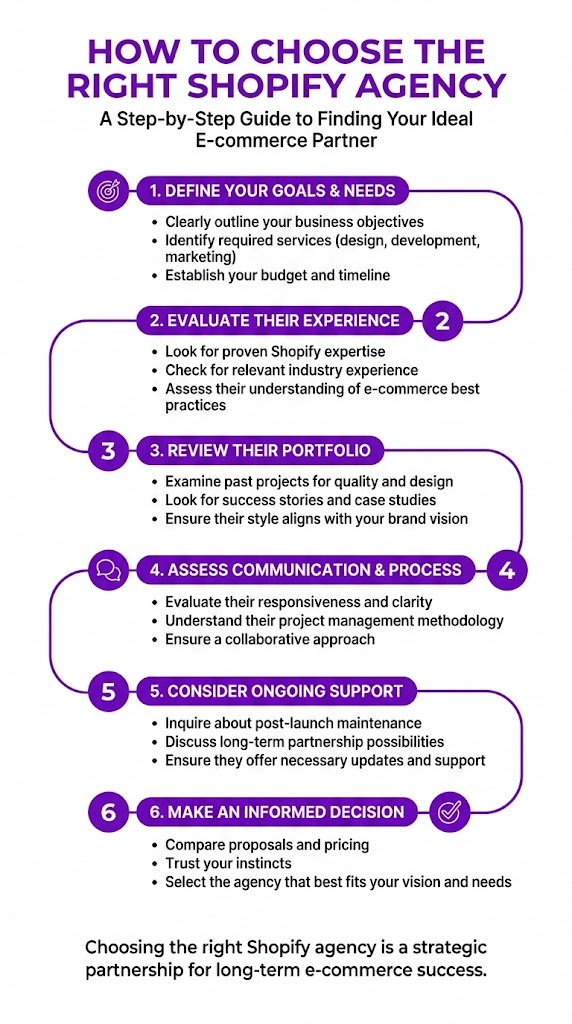
Look. Launching then scaling any online retail brand is hard. It’s a big investment in well … everything. From the cost of setting up a setup to the demands of identity designers, technical support specialists and performance marketing professionals, every partner and any development agency you choose will definitely impact your chances. So. Clearly defining your goals, assessing their technical expertise, carefully checking client reviews, and having genuine conversations, you’ll significantly improve the chances of finding the right match.
Frequently Asked Questions (FAQ)
How much does a Shopify Development Agency cost?
Lets just say that rates vary a lot based on project complexity and agency location. Simple customizations might run $1,000 to $5,000. Custom theme builds typically range from $15,000 to $50,000. Complex migrations or app development can exceed $100,000. Hourly rates for development agencies usually fall between $100 and $250 per hour, with some premium shops charging more.
Do I need a dev agency or can I use apps?
Apps solve many common problems affordably, and you should always check the Shopify App Store before assuming you need custom development. But apps have limitations. They can conflict with each other, slow down your site, and sometimes do 80% of what you need while missing the crucial 20%. Development agencies make sense when apps don’t exist for your use case, when you need tight integration between multiple systems, or when performance and reliability matter enough to justify custom code.
What should I look for when hiring a Shopify Development Agency?
Experience with projects similar to yours matters more than general Shopify experience. Ask for case studies or references from comparable migrations, integrations, or builds. Check whether they have dedicated QA processes. Ask about their approach to documentation. And pay attention to how they communicate during the sales process. Agencies that are slow or unclear before you hire them rarely improve after.