
Replatforming: From BigCommerce to Shopify
Written and edited by: Eric
Hey everyone! How’s everything out there today?
Eric Boisjoli here, and let me start this one by telling you something about platform migrations that vendors never want to admit. They’re painful. Every single one. Even when you’re moving from an objectively worse platform to a better one, migration is still going to hurt. The question isn’t whether migrating from BigCommerce to Shopify will be any variation of “smooth” … It won’t be. The question is whether the pain will be worth the payoff. For most growing online retailers on BigCommerce, especially after all their recent strategic shifts, the answer is increasingly yes.
BigCommerce has been making some interesting choices lately. Ever since their Q3 earnings call back in 2024, they’ve been explicitly targeting enterprise B2B brands, and their Enterprise platform revenue has grown 28% year-over-year while their total revenue grew only 7%. They’re not hiding this focus either. Their recent product updates, pricing changes, and resource allocation all scream “enterprise or bust.” In other words. If you happen to be a mid-sized online retailer on BigCommerce you’ve been watching their platform evolve away from you in real-time.
That doesn’t mean that BigCommerce is being evil. Not necessarily. It’s just them choosing to target the niche where they think they’re the most competitive. And we do the same at BOLD. But if you’re pulling in $2 million in annual revenue, not $20 million, you’re increasingly finding yourself using a platform that’s being optimized for someone else’s needs. Features you want get deprioritized. Support resources flow to enterprise accounts. The apps ecosystem stagnates because app developers follow the money, and the money is following BigCommerce upmarket.
The Technical Side of Leaving BigCommerce
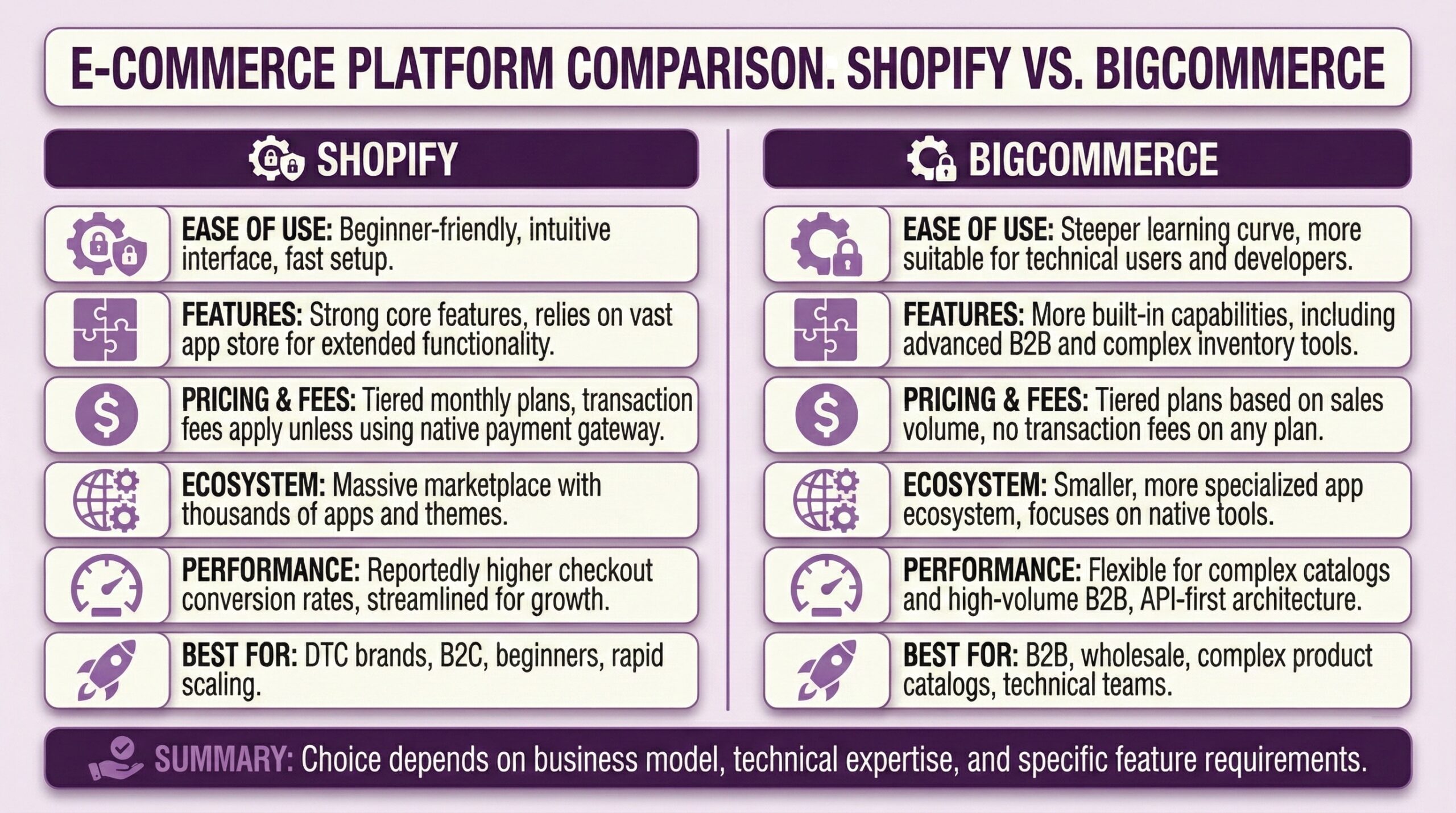
BigCommerce is a fairly capable e-commerce platform. But. Lemme be clearer about that. Their Stencil framework is actually pretty good. It offers genuine component-based development that you could argue is more flexible than Shopify’s Liquid templating. Their API structure is comprehensive, with proper REST endpoints for essentially everything and GraphQL support that might be more mature. They don’t have the same variant limitations that can drive merchants running crazy. And their built-in suite of B2B features, are generally considered to be superior to Shopify’s built-in B2B capabilities.
But that’s the good news. On the other side. BigCommerce’s app ecosystem only has 1,234 apps. Shopify’s app store lists over 8,000 (trust me). Which isn’t a marginal difference. It means that basically every specialized need, every integration requirement, every growth hack you might want to try on for size, Shopify probably has three competing apps for it. But. BigCommerce might not have any.
The specialized developer talent pool is the same story. Try hiring a BigCommerce developer versus finding a Shopify developer. For every BigCommerce Expert, there are probably twenty Shopify Development Agencies. So. Basic economics applies. More developers means more competition, which means better prices and faster delivery for merchants. When you need something coded at 2 AM before BFCM, the talent pool’s size suddenly matters a lot.
On the other hand, BigCommerce’s infrastructure is solid, but they’re running on a traditional monolithic architecture that’s showing its age. Shopify’s infrastructure, rebuilt on their Oxygen hosting platform, consistently delivers better Core Web Vitals scores. According to HTTP Archive data from December 2024, median Shopify stores load in 2.1 seconds while Big stores average 2.8 seconds. And that 700-millisecond difference translates directly to conversion rates.
The Business Case That Matters to Merchants
Translation. It’s time to talk money, because that’s what this decision will really come down to. On paper, BigCommerce’s pricing looks competitive. Their Standard plan runs $29/month and beats Shopify’s $39/month Basic. But that’s before you realize that BigCommerce has revenue thresholds that trigger automatic plan upgrades. Hit $50K in annual sales and you’re forced to Pro at $79/month. Hit $180K and you’re on Plus at $269/month. Meanwhile, Shopify’s Basic plan has no revenue limits. You could do $1 million on Shopify’s $39 plan if you really wanted to.
Then. Transaction fees tell a similar story. BigCommerce doesn’t charge additional transaction fees if you use their preferred payment providers but their list of preferred providers is limited and might not include the processor you want or the one offering you the best rates. Shopify Payments’ rates are competitive, and if you use it, you avoid additional transaction fees entirely. Plus, Shopify Payments is available in 23 countries vs BigCommerce’s limited payment options.
The ecosystem economics matter too. More apps means more competition. Trust me. Which means competitive pricing. A BigCommerce app with no competitors can charge whatever they want. The same functionality on Shopify might have five apps competing on price and features. Over time, little differences like that tend to compound. What I’m trying to say is. You’re not just choosing an e-commerce platform. You’re choosing to opt into that platform’s entire ecosystem.
The Advantages of Shopify That’ll Impact Revenue
Let’s see. Shopify’s checkout converts better. Period. Their Shop Pay accelerated checkout has 200+ million opted-in users who can buy from your store with literally one click. BigCommerce doesn’t have anything comparable. According to Shopify’s data, Shop Pay converts 50% better than regular checkouts and 10% better than other accelerated checkouts. For a retailer doing $2 million annually, that difference in conversions alone could mean $100K in additional revenue.
Next. The international selling capabilities aren’t even close. Shopify Markets handles multiple currencies, automatic tax calculation, and local payment methods across 175 countries. BigCommerce’s international features require multiple apps and manual configuration. So. If international expansion is anywhere in your near future, Shopify will make it dramatically easier.
Then. There’s mobile commerce and it’s where Shopify really embarrasses BigCommerce. The Shop app has 130 million users who can track orders, discover products, and make purchases directly. Shop’s local pickup and delivery features integrate seamlessly with online stores. BigCommerce’s mobile story is basically “your website works on phones.” That’s not enough anymore when mobile accounts for 59% of e-commerce traffic according to Statista’s 2025 data.
Finally, the fulfillment network access really will matter for scaling merchants. Shopify Fulfillment Network provides 2-day delivery to 90% of the US. Their algorithms automatically route orders to the optimal fulfillment center. BigCommerce merchants need to piece together their own solution using third-party logistics providers. When Amazon has trained us all to just always expect deliveries in 2-days, having native access to the capability to offer it is a competitive requirement.
Each Retail Platform’s Stability and Future Direction
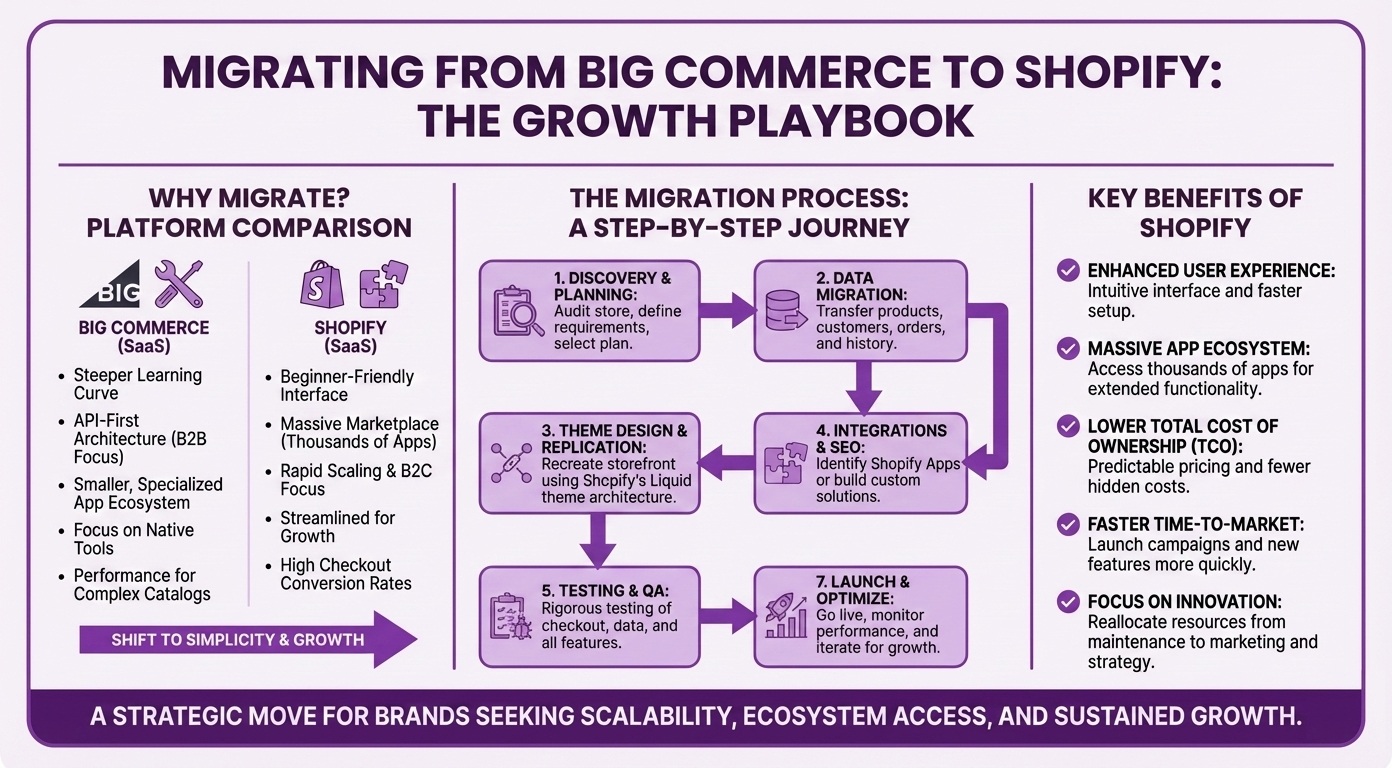
BigCommerce’s strategic pivot toward enterprise B2B isn’t speculation on my part. It’s their publicly stated strategy. And it’s not that they’re abandoning smaller retailers, they’re just moving away from making them their priority. Meanwhile. Shopify’s trajectory is focused on e-commerce brands of all sizes. They’re investing heavily in tools that will help smaller merchants compete with larger operations. Their POS system unifies online and offline selling. Their new Sidekick AI assistant was built to help retailers who can’t afford full-time designers. developers or marketers.
These aren’t enterprise plays. They’re specifically designed for growing online brands like yours.
I should probably add that their respective financial stability matters too. Shopify’s Q2 2025 revenue was $2.68 and up 31% year-over-year. BigCommerce’s was $84.4 million. Shopify’s market cap is around $180-200 billion. BigCommerce’s is in the $350-400 million range. One’s thriving. The other’s more like fighting for relevance. Where would you rather build your online store’s foundation?
Cons of Shopify Migration (‘Cause Honesty Matters)
First. Migration will probably take longer than you think. Plan for three months minimum, and six months will be more realistic if you have a complex store. During that time, you’ll essentially be operating on two platforms, which will mean double the work and double the potential for errors.
You’ll also lose some BigCommerce-specific features. Their native B2B functionality is superior. Their product filtering is more flexible. Their built-in abandoned cart saver is free while Shopify’s requires apps (pretty darn good apps in my opinion but still apps). If you’ve built your operation around these specific features, you’ll need to find and pay for those “solutions” to replicate them.
Your organic rankings will likely suffer temporarily. No matter how careful you are with redirects, Google crawls and indexes on its own time and it will need however much of that it takes to get its head around your store’s new site structure. So expect at least 10-20% drop in organic traffic for the first few months. It’ll recover, but that temporary dip can hurt if you aren’t prepared for it.
Training and team adjustment costs are real too. You know BigCommerce. You’ve learned it and you’ll need to learn Shopify too. Your custom procedures and workflows will need updating. Your integrations will need rebuilding. These soft costs often exceed the hard costs of migration itself.
Pros That Will Make Switching to Shopify Worth It
First. And you should probably read this one twice. Access to Shopify’s ecosystem will change everything. Those 8,000+ apps might be a pain when you’re using one to jury rig some feature you already had, but when you need to do something new, when you need an LLMs.txt because AI is suddenly everything or a Shoppable Video tool for your move to TikTok Shop, they’ll mean you can add capabilities without adding custom app developer to your payroll. Need advanced product review management? There’s LOOX. Want relationship-driven email marketing? Klaviyo integrates perfectly. Every growth tactic you read about probably has a Shopify App ready to go.
Which also means that you’ll only need to find and hire specialized developers when you need serious development work done, and that the greater availability of Shopify Expert Devs plus the existence of matching services like ours to help find them, will make scaling easier. When you need custom development, you’ll find developers faster and pay less because you’ll be using them less. When something breaks, you’ll fix it quicker. When you want to expand capabilities, you’ll have options. And the value of that much operational efficiency will compound over time.
The platform’s future alignment with growing retail brands means you won’t get abandoned. Shopify’s building features for businesses like yours. Their AI tools, fulfillment network, and POS system are all designed for merchants who’ve outgrown basic e-commerce (Design, Dev, Mktg) but who aren’t ready for real enterprise solutions. You’re their target market, not an afterthought.
Platform Migration Technical Challenges You’ll Face
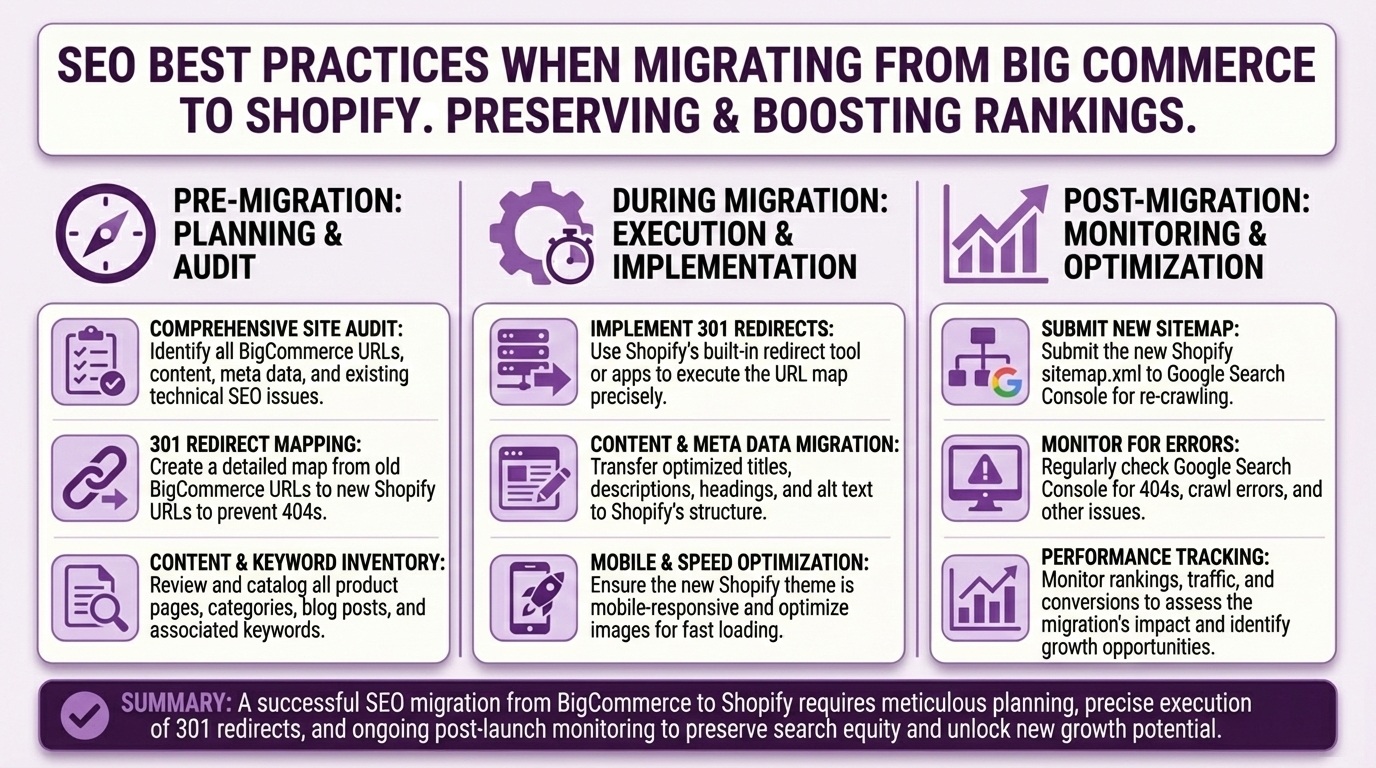
The data migration itself isn’t exactly complex conceptually. Products will still be products. Customers will still be customers. Orders will still be orders. But bedeviling devils dwell in details, and friends, there are a lot of details, to detail, when it comes to changing platforms.
BigCommerce and Shopify handle product variants differently. BigCommerce allows unlimited options and variants. Shopify limits you to three options and 100 variants per product. If you’re selling skate decks with custom delams in ten finishes and six sizes, you’ll be fine. If you’re selling customizable decks with innumerable dimensions, you’ll need to restructure your catalog or use apps to work around Shopify’s built-in limitations.
URL structures will require careful planning, because BigCommerce uses paths like /product-name/ while Shopify uses /products/product-name. Every single product URL needs proper 301 redirects or you’ll crater your SEO. The same applies to category pages, blog posts, and any custom pages you’ve built. Miss some redirects and watch your organic traffic disappear while Google takes its time sussing out your new structure.
Your customer’s passwords won’t migrate. They can’t. The platforms hash passwords differently for security, and you not only can’t reverse a hash you shouldn’t. So. Your customers will need to reset their passwords after migration. And that means preparing for a flood of password reset emails and probably losing some customers who can’t be bothered. Smart store owners schedule their e-commerce platform migrations for their slow periods and pre-stage all the necessary out-reach and communications campaigns.
Then there’s the whole issue of checkout customization. You see. BigCommerce offers extensive checkout modifications through its Checkout SDK. On the other hand, Shopify restricts it unless you’re on Shopify Plus. With Checkout Extensibility, merchants on Plus can build advanced checkout customizations, while non-Plus merchants are limited to basic branding, app integrations, or post-purchase flows. If you’ve built custom checkout functionality you’ll need to upgrade to Plus to replicate it or settle for partial workarounds.

Making the Decision to Migrate to Shopify
Finally. Here’s my framework for deciding distilled down into its simplest form. If you’re pulling down over $1 million annually, growing 20% or more yearly, and are finding BigCommerce’s ecosystem limiting, migrate now. The math works. If you’re heavily B2B-focused with complex pricing rules and customer hierarchies, maybe stay put. BigCommerce definitely handles that specific use case better than Shopify Basic, even though Shopify Plus closes most of that gap.
If you’re technically sophisticated and have built extensive customizations on BigCommerce, consider Shopify Plus directly. Yes, it’s $2,500 monthly, but Plus gives you everything BigCommerce Enterprise offers but with Shopify’s superior ecosystem. O’ and again. Timing matters. Don’t migrate during peak season. Don’t migrate when you’re launching new products. Don’t migrate when you’re already managing other major changes. Find a vetted Development Agency that someone you trust can vouch for (unsubtle hint) then pick a quiet quarter, budget maybe double the time you think you need and prepare for things to go wrong because they will.
BigCommerce isn’t really a bad platform. It’s just increasingly the wrong platform for growing merchants who aren’t already enterprise B2B companies. They’ve chosen their lane, and if you’re not in it, you’re swimming against the current. Shopify’s building for store owners like you. Their ecosystem supports retail brands like yours. And their trajectory aligns with your trajectory.
Well, I think that that’s gonna be it for me. I gotta run and implement distributed tracing with OpenTelemetry to hunt down a latency bottleneck between our inventory service and the main API gateway that’s been driving me crazy since Tuesday. Hope this helped you explore your replatforming options or even just wrestle with the decision a bit better. But, if you need more than a blog post worth of help navigating the complexities of e-commerce platform migration, don’t hesitate to reach out, to get help finding an agency that specializes in BigCommerce to Shopify migrations, remember, that’s the kind of advice that we built Bold Match to give. — Eric
Frequently Asked Questions (FAQ)
How long does migrating from BigCommerce to Shopify actually take?
Three to six months minimum for a proper migration, and I’m being optimistic. Sure, if you’ve got a simple catalog-only store with no customizations, maybe you squeeze it into 6-8 weeks. But that’s fantasy for most merchants. You’re looking at data export and import, which always has issues. Theme development that inevitably takes longer than quoted. Finding and configuring Shopify apps to replace your BigCommerce stack. Testing checkout flows until your eyes bleed. Training your team who’ll click the wrong buttons for weeks. Then add buffer time because your product variants won’t import correctly or that critical BigCommerce app has no Shopify equivalent and now you need custom development. Rushing this process is exactly how you tank your business. Take the time. Do it right.
What happens to my SEO rankings when I migrate?
You’re going to lose traffic initially. Maybe 10-20% for the first few months, even if you nail every single redirect. And yes, you need those 301 redirects for every URL, that’s non-negotiable. But redirects aren’t magic. Google has to recrawl your entire site, understand the new structure, figure out that /product-name/ is now /products/product-name/, and transfer all that accumulated authority. Takes time. The good news? Most properly executed migrations recover and actually exceed previous rankings within six months. Document everything before you start. Current rankings, traffic sources, top performing pages. You need that baseline to track recovery. And please, please don’t get clever and change your domain name during migration. That’s like moving houses and changing your phone number at the same time. Unnecessary pain.
Can I keep my BigCommerce checkout customizations on Shopify?
Not on standard Shopify, no. This is where BigCommerce actually has an edge. Their Checkout SDK lets you modify pretty much anything. Shopify’s regular checkout is locked down tight. You’ve got three options, none perfect. First, upgrade to Shopify Plus at $2,500 monthly, which gives you checkout customization through their Extensions. Second, try to replicate functionality using apps, though these can’t touch core checkout, only add around it. Third, redesign your flow to work within Shopify’s constraints. Honestly? Most merchants discover Shopify’s standard checkout converts better anyway. It’s been optimized by millions of transactions. But if you’ve built specific business logic into checkout, like B2B approval workflows or complex discount rules, you probably need Plus.
How do I handle customer passwords during migration?
You can’t migrate them. Full stop. Platforms hash passwords using different methods, and you can’t reverse a hash. That’s security 101. Every single customer needs to reset their password. Here’s how you minimize the pain. Import customers with reset tokens ready to go. Craft an email campaign that explains the migration simply, makes the reset process dead easy, maybe throws in a 10% discount for the trouble. Send it during your slowest traffic period. Even with perfect execution, expect to lose 5-10% of customers who can’t be bothered. That’s just reality. The ones who care will reset. The ones who don’t weren’t engaged anyway.
What’s the real cost difference between the platforms?
The sticker prices lie. BigCommerce starts at $29 monthly, Shopify at $39. Looks like BigCommerce wins, right? Wrong. Hit $50K in annual sales on BigCommerce and you’re forced to their $79 plan. Hit $180K and you’re paying $269. Meanwhile, you could do $10 million on Shopify’s $39 plan if you wanted. Then factor in the ecosystem. BigCommerce has maybe one app for your need, so they charge whatever they want. Shopify has five apps competing, driving prices down. Need a developer? BigCommerce developers are scarce and expensive. Shopify developers are everywhere, competing for your business. Transaction fees, app costs, developer rates, they all compound. Most merchants doing real volume find Shopify significantly cheaper despite the higher base price.
Will my BigCommerce apps work on Shopify?
Not a single one. Different platforms, different architectures, different everything. But here’s the thing. Whatever you’re using on BigCommerce, Shopify probably has three alternatives. Maybe five. The painful part is documenting every app you use, finding replacements, migrating data, reconfiguring workflows, retraining staff. Budget serious time for this. Sometimes one BigCommerce app needs three Shopify apps to replicate. Sometimes three BigCommerce apps get replaced by one superior Shopify app. Map it all out before you start migration or you’ll discover critical functionality missing at the worst possible moment.
Should I go straight to Shopify Plus?
If you’re doing over $800K annually and you need checkout customization, complex B2B features, or you’re hammering APIs constantly, yeah, consider Plus directly. The $2,500 monthly sounds brutal but includes unlimited staff accounts (regular Shopify charges per seat over 15), lower transaction rates that add up fast, dedicated support that actually answers the phone, and advanced features you’ll probably need anyway. Most merchants should start with regular Shopify though. You can always upgrade later, and Shopify makes that transition smooth because they want your money. Only go Plus initially if you have specific Plus-only requirements.
What about BigCommerce’s superior B2B features?
This is BigCommerce’s legitimate advantage. Customer groups, price lists, quote management, approval workflows, it’s all there natively. Shopify’s catching up but isn’t there yet. However, Shopify Plus B2B features are improving monthly, and apps like SparkLayer or B2B Wholesale Solution handle most standard B2B needs on regular Shopify. Here’s the real question. Are you purely B2B with complex requirements like customer-specific catalogs and multi-tier approval chains? Then evaluate carefully. But if you’re mixed B2B and B2C, or your B2B needs are straightforward, Shopify’s overall ecosystem advantages usually outweigh BigCommerce’s B2B edge. The 8,000 apps, the developer availability, the checkout conversion rates, they add up to more than native quote management.