
What’s a Shopify Design Agency?
To put it as simply as possible. Shopify Design Agencies are specialist creative firms that focus on making e-commerce stores look good and convert well. Unlike general web design shops that treat Shopify as just another platform, the expert designers at these agencies understand Shopify’s particular constraints. They know what’s possible within theme architecture. They know which design flourishes might tank your Core Web Vitals and the difference between a store that’ll look great in a portfolio and one that’s great at moving merchandise.
The “design” designation can be misleading though. These aren’t just visual aesthetics people. Good Shopify design agencies handle User Interface/User Experience (UI/UX) research, conversion rate optimization, brand identity systems, and the kind of strategic thinking that connects how your store looks to how it performs. They translate online retail brands into fully-functional e-commerce experiences.
What Services Do They Actually Provide?
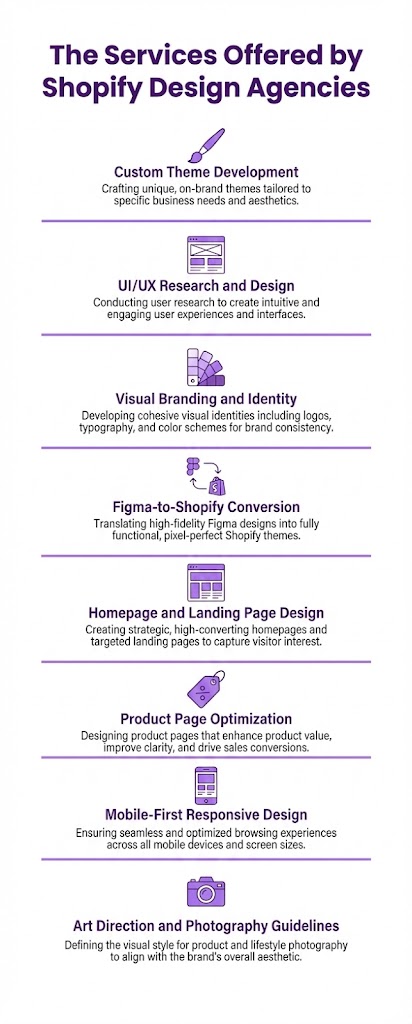
Services vary by agency, but retailers will find some combination of …
- Visual branding and identity that maintains consistency across channels
- Custom theme development for brands that have outgrown templates
- UI/UX research + design including wireframing, prototyping and testing
- Home and landing page design optimized for campaigns and conversions
- Product landing page optimization engineered for sales rather than display
- Art direction and photography guidelines for visual consistency at scale
- Mobile-first responsive design where most e-commerce traffic originates
- Figma-to-Shopify conversion for teams with existing design assets that need implementation
Design Agency vs. Freelance Expert Designers?
Honestly. Freelance designers can be excellent for small, narrowly, focused jobs. But expert agencies make more sense when you need multiple design disciplines working together. A rebrand that touches your store, your email templates, your social, and your packaging is easier when one team owns the whole visual system. Agencies also provide continuity. If your freelancer gets busy or disappears, you’re starting over. Expert agencies have institutional knowledge that survives personnel changes. That said. Agencies cost more. Their overhead gets passed to you. For straightforward theme tweaks or a single landing page, a solo designer might be the smarter call.
Help Finding a Reliable Shopify Design Agency
Finding the right Shopify Design Agency means finding a team that understands both aesthetics and commerce. The best ones function as strategic partners rather than pixel-pushers. They conduct conversion analysis alongside mood board development. They treat A/B testing results with the same seriousness as brand guidelines. You can browse Shopify’s Partner Directory filtered by design services, or you can use a matching service like ours. Bold Match pre-vets agencies and connects you based on your specific project requirements.
Frequently Asked Questions (FAQ)
How much do Design Agencies charge?
Project rates typically start around $5,000 for focused work like a homepage redesign and can run to $50,000 or more for comprehensive brand and store overhauls. Monthly retainers for ongoing design support range from $2,000 to $10,000 depending on scope. Custom theme development from scratch usually falls in the $15,000 to $40,000 range.Design Agency vs. Development Agencies?
There’s certainly overlap, and its certainly arguable that most firms offer both, but the focus differs. Design agencies lead with visual strategy, UX research, and brand identity. Development agencies lead with code, custom functionality, and integrations. Many agencies offer both, but their primary expertise usually leans one direction. If your project is mostly “make it look better and convert better,” you want design-first. If it’s “build this custom feature,” you want dev-first.What should I have ready before contacting a design agency?
Well. At a minimum, you’re gonna have to know your budget range, timeline expectations, and what problem you’re trying to solve. Having brand guidelines, competitor examples you admire, and access to your current store’s analytics helps agencies scope accurately. The more clarity you bring, the better proposals you’ll receive.