
What Is a Shopify Marketing Agency?
Shopify Marketing Agencies are just that, performance marketing firms that specialize in the strategies that drive traffic, conversions, and customer retention specifically for online retailers on Shopify. The distinction from general digital marketing firms matters because e-commerce marketing operates under fundamentally different economics.
Every campaign ties directly to trackable revenue. Every tactic has measurable ROAS implications. They recognize that iOS privacy changes hit Facebook advertising effectiveness differently for e-commerce than for lead gen. The margin for vanity metrics shrinks considerably when you can trace the exact path taken from a search or social ad impression to a consumer finally eschewing your best upsell for a down-sell then checking out of your store.
Similarly. What separates a Shopify-specialized agency from retail generalists is their platform fluency. They get how product page SEO has to be approached on Shopify vs WooCommerce. Understand Shopify’s data ecosystem. They know how to leverage native analytics alongside third-party attribution tools. And they have direct experience with the apps, integrations, and workflows that actually move revenue needles.
What Services Do They Provide?
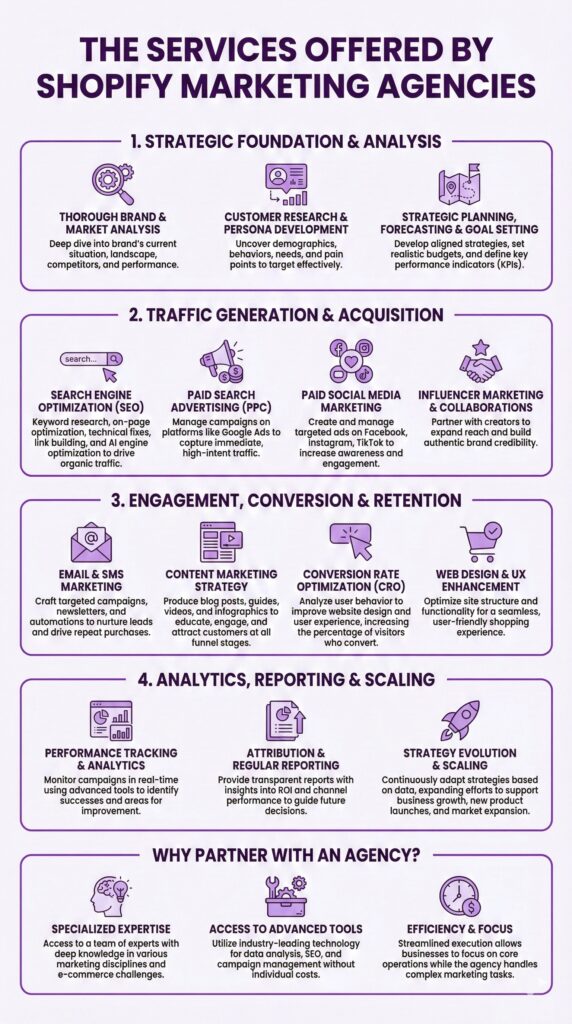
Every firm’s services vary but can span the acquisition to retention spectrum.
- Pay-per-click advertising across Google, Meta, TikTok, and Pinterest
- Search engine optimization tailored to Shopify’s specific constraints
- SMS marketing for time-sensitive promotions and high-intent customers
- Social media management that goes into actual commerce integration
- Influencer marketing and affiliate program management
- Retargeting campaigns to recapture browse and cart abandoners
- CRO including A/B testing, behavior analysis, and checkout flow i
- Email marketing through Klaviyo, Shopify Email, or Omnisend with automation workflows for abandoned carts, post-purchase sequences, and winback campaigns
Expert Agencies vs. In-House Specialists?
Honestly. Some merchants do fine handling their own marketing, especially early on when their budgets are tight and learning the fundamentals has value. But agencies make sense when you need to scale faster than you can hire, when you’re spending enough on ads that expertise pays for itself in efficiency gains, or when you’re expanding into channels where you lack experience.
Finding a Shopify Marketing Agency
You can browse Shopify’s Partner Directory filtered by marketing services, or use an expert agency matching service like ours. Bold Match can connect you with pre-vetted agencies based on your specific needs and budget.
Frequently Asked Questions (FAQ)
How much do Marketing Agencies charge?
It won’t come as a surprise to hear that pricing varies. Monthly retainers for Shopify Marketing Agencies range from $2,000 to $20,000 depending on services and scope. Some agencies charge percentage-of-ad-spend, usually 10-20%. Others use performance-based structures tied to revenue outcomes. The right model depends on your growth stage, internal capabilities, and risk tolerance. Be wary of agencies that won’t explain their pricing logic.
Marketing Agencies vs. Design Agencies?
Simply put. Different specialist focuses. Marketing agencies drive traffic and optimize conversion through campaigns, content, and channel management. Design agencies build the visual experience and user interface. There’s overlap in conversion rate optimization, but marketing agencies typically test within existing designs while design agencies create new ones. Some agencies offer both, but most specialize.
What Results Should I Expect and When?
That’s gonna depend entirely on your starting point, your budget, and the channels your marketing strategy whatever it is opts into. Paid advertising can show results within weeks. SEO typically takes 3-6 months for meaningful movement. GEO is literally too new to say. Email automation improvements often show quick wins. In other words. Any marketing agency that starts promising specific revenue guarantees before auditing your shopify store should raise red flags. Good e-commerce agencies set realistic timelines and explain their reasoning.