
Framework for Deciding When to Hire Expert Help (The Real Cost of DIY)
Written and edited by: Jay
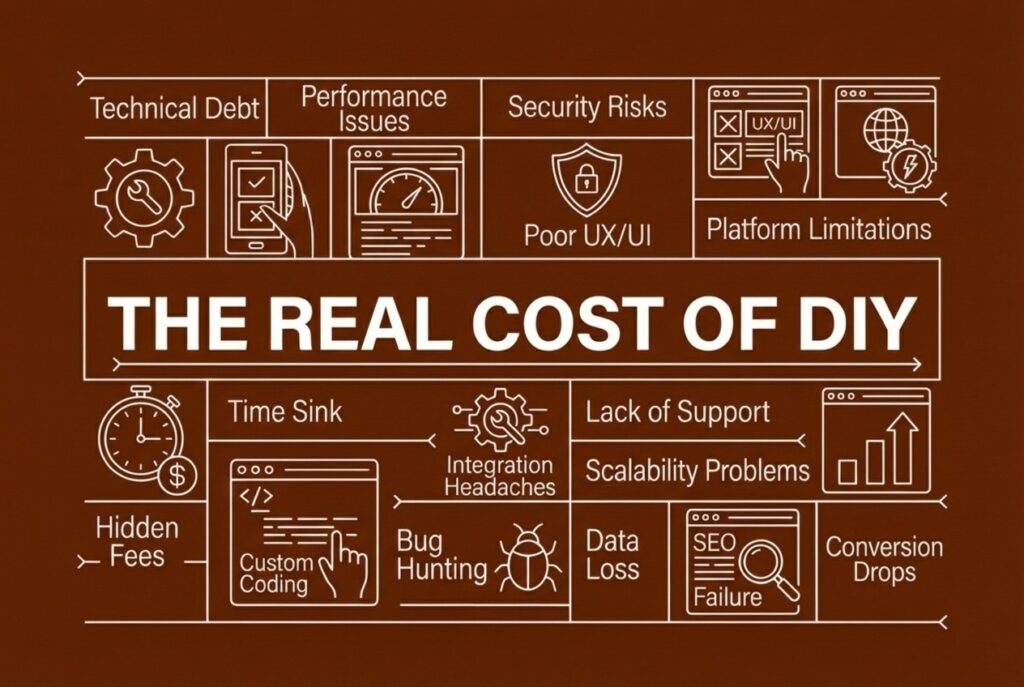
Hey there gang. Happy New Year!
That’s right. It’s me again. Jay Myers taking a brief break from my awesome podcast Shopify1Percent (which you should subscribe to). because I wanna talk about the DIY question. You know. Should you tackle that custom theme yourself? Could you really learn headless architecting from YouTube tutorials? Is hiring an expert or agency just throwing money at problems you could solve with a few late nights and more than enough caffeine? I get it. I do. The appeal of doing it yourself can be powerful. You built your business from nothing. You’ve figured out inventory management, customer service, marketing. Why not tackle a bit of web development too?
Well. Something I’ve learned from the merchant-agency relationships I’ve watched is that the decision to DIY or hire expert help isn’t completely about capability. It is about the math. Just not the kind of math too many store owners are doing when they make the call.
Opportunity Costs Retailers Often Forget To Calculate
Let me walk you through something. Say you’re running a specialty bubble gun slash speciality bubble gun liquid supply store doing $500,000 annually because bubble gun battles are suddenly having a moment. That works out to roughly $1,370 per day in revenue. Every day you spend learning Liquid templating or debugging Core Web Vitals issues or wrestling with checkout extensibility is a day you aren’t spending pursuing partnerships with those Twitch Streamers and TikTok Influencers at the center of your growth marketing
Back in 2017, OakStone Partners research found that product launch delays can cost anywhere from 15 to 35 percent of a project’s net present value (npv). When it comes to the electronics industry specifically, introducing one of their products 9 to 12 months late can cost retailers as much 50 percent of anticipated revenues. Now. Obviously e-commerce isn’t electronics manufacturing. But the basic principle holds nevertheless. Time has a cost. And frankly, doing do it yourself almost always takes longer than you think it will.
I mean. If you’re a growing merchant who spends three months learning or custom theme development to save $10,000 in agency fees has actually spent $123,300 worth of time if we’re being honest about what those hours could have produced elsewhere in the business. Even if we assume only half that time could have been productive revenue-generating work, we’re still looking at a net loss.
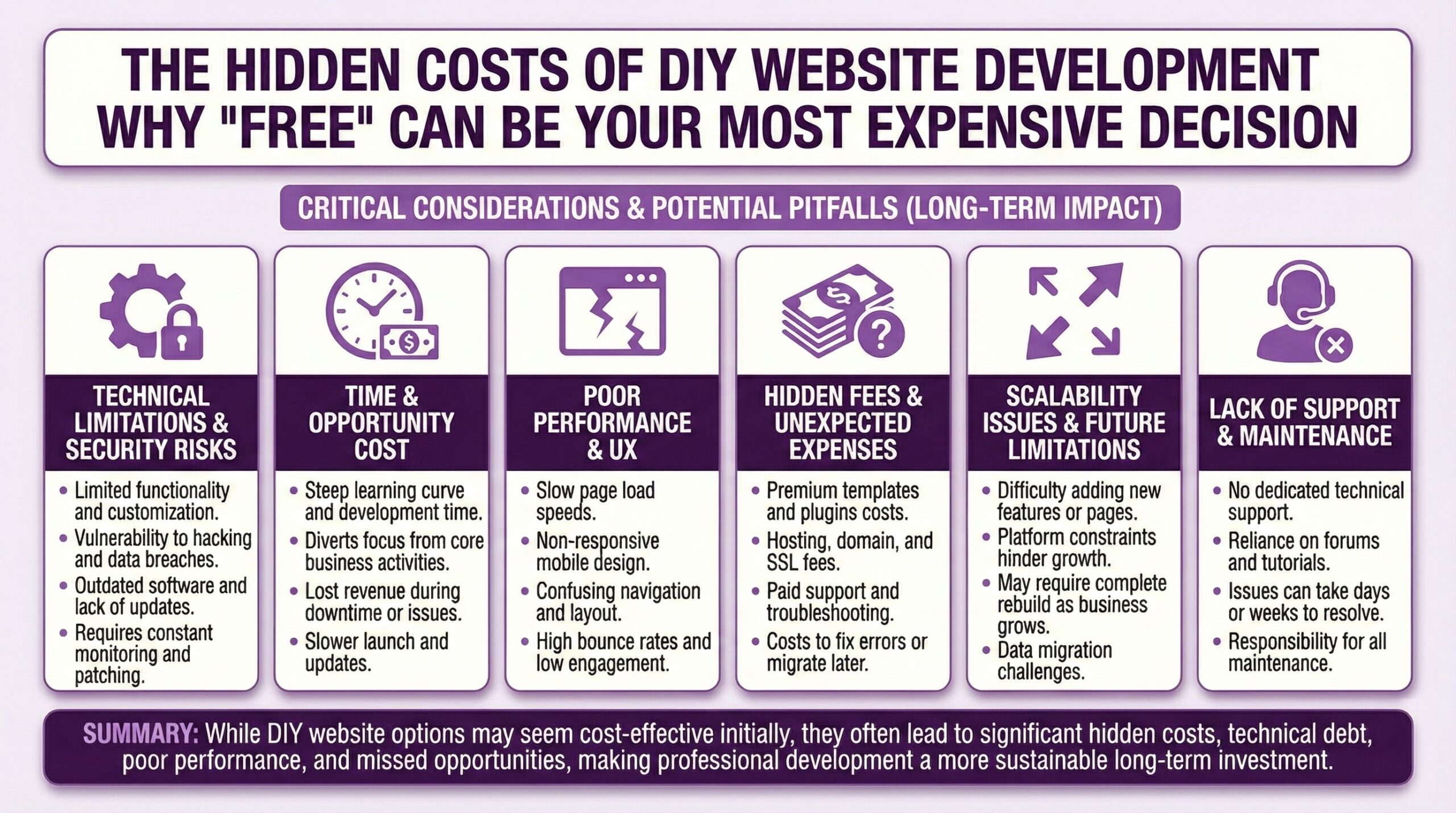
The Four Hidden Costs of DIY Design or Development
Before you decide to tackle a technical development project of any real depth yourself, take a breath and think through what you’ll actually be signing up for. Like these costs that won’t show up in obvious comparisons between “DIY time” and an agency’s invoices.
-
- Learning Curve Investment: This is the time it takes to get competent enough to even start the real work. Not proficient. Just competent. For custom Shopify theme development, realistic estimates run 50 to 100 hours before you can make meaningful changes without breaking things. For headless commerce architecture, double or triple that. And here’s the kicker. Shopify changes constantly. Your hard-won knowledge depreciates. The checkout extensibility expertise you build today needs updating when Shopify releases new APIs next quarter.
- Opportunity Cost: Every hour you spend learning Liquid templating is an hour you’re not spending on customer acquisition, product development, vendor negotiations, or the hundred other things that actually grow revenue. Your time has value even when you’re not billing for it. The CEO doing data entry is still paying CEO rates for that data entry, whether they realize it or not.
- Mistake Risk: Some DIY errors are recoverable. Broken CSS is annoying but fixable. Other mistakes are expensive. A botched migration can tank your organic traffic for months. Checkout problems crater conversion rates. Security vulnerabilities you don’t even know you’ve created sit there waiting to become expensive problems. Dev Agencies carry professional liability insurance for a reason. When you Do It Yourself, you’re self-insuring against your own inexperience.
- Speed-to-Market Delay: The time difference between when an agency could finish and when you’ll finish represents revenue you’re not capturing. If a feature launch is delayed by two months because you’re learning instead of executing, that’s two months of competitive disadvantage. Two months for rivals to grab market share. Research suggests late product introductions can cost 15 to 35 percent of net present value depending on market dynamics.
Four Hidden Costs of Hiring Design or Development Experts
Fair is fair. Agencies aren’t free money either. Here’s what you’re actually paying for beyond the invoice.
-
- Management Overhead: Briefing takes time. Feedback cycles take time. Revisions take time. You’ll spend hours on calls, writing requirements, reviewing deliverables. This isn’t wasted time, but it’s not zero either. Budget 10 to 20 percent of your project timeline for management work on your end.
- Communication Friction: No agency knows your business like you do. They’ll need ramp-up time. They’ll ask questions that feel obvious. They’ll make assumptions that need correcting. The first project with any agency involves more back-and-forth than subsequent ones. This friction cost decreases over time if you build a lasting relationship.
- Dependency Creation: What happens when the engagement ends? If your agency partner built something only their devs understand, you’re dependent on them for most future changes. Good development agencies document their work and transfer knowledge. Not-so-good firms ensure job security through complexity. Ask about handoff processes before you sign.
- Cash Flow Impact: Partner Agency fees hit your bank account now. DIY costs are paid in time, which can feel abstract, but for cash-constrained retail brands, the timing of expenditures matters independent of their total size. A $15,000 expert agency fee paid upfront might be more painful than $20,000 of your time spread over six months, even though the time costs more.
Where DIY Dev Makes Sense (And Where It Doesn’t)
Not everything requires expert specialist help. That’d frankly be absurd. The question is knowing which projects fall into which bucket.
DIY Development Territory (Go For It)
Basic theme customization falls squarely here. Changing colors, updating fonts, swapping out images, adjusting text. Shopify built their platform specifically so store owners could handle this stuff without technical help. If you’re paying an agency to change your homepage banner, you’re overpaying. App installation and basic configuration also belongs in your court.
Most Shopify apps walk you through setup step by step. Email marketing integrations, review collection, basic analytics. These are designed for non-technical users. Trust the onboarding flows. Content updates are another obvious one. Product descriptions, blog posts, collection pages. This is your brand voice. You know it better than any agency ever will.
Partner Agency Territory (Hire Expert Help)
Custom 2.0 theme development sits firmly on the agency side. We’re talking about stores that need specific functionality their current theme can’t provide. The average custom theme development runs $5,000 to $15,000 through a reputable agency, and timeline is usually 4 to 8 weeks. Compare that to the 3 to 6 months a determined DIYer typically needs, plus the opportunity cost we already discussed, plus the debugging and maintenance challenges that come from self-taught code.
Headless commerce builds are another clear case for expert help. Shopify’s Hydrogen framework is powerful but the learning curve is steep. Agencies report headless projects taking 4 to 7 months even for experienced teams. And the cost structure reflects that complexity. You’re usually looking at $50,000 to $150,000 for a production-ready headless storefront. Yes, that sounds like a lot. But attempting this solo without deep React and API experience is how merchants end up with half-finished projects and burned budget.
Checkout extensibility migrations require understanding Shopify’s specific API constraints and the deprecation timeline. If you’re still running checkout.liquid customizations, the clock is ticking. This isn’t something to learn on the fly.
Platform migrations deserve special attention. Moving from OpenCart would be one thing but migrating from WooCommerce or Magento or BigCommerce will involve data integrity, SEO preservation, and redirect mapping that can make or break your organic traffic. The technical execution matters, but so does the strategic planning around timing and risk mitigation.

Here’s A Decision Matrix You Can Use
Here’s a framework that actually helps. For any technical project, ask yourself four questions.
Question One. Have I done this specific thing before successfully? Not something similar. This exact thing. Because Shopify development has enough edge cases and platform-specific quirks that adjacent experience often doesn’t transfer the way you’d expect.
Question Two. What’s my realistic timeline if I do this myself? Take your gut estimate and double it. Maybe triple it. That’s closer to reality. Now calculate what that time costs in delayed revenue, missed opportunities, and attention diverted from core business activities.
Question Three. What happens if I get it wrong? Some mistakes are recoverable. Broken CSS is annoying but fixable. Other mistakes are expensive. Botched SEO during a migration can crater your organic traffic for months. Checkout problems can tank conversion rates. Data loss during a platform switch can be catastrophic.
Question Four. Is this a one-time project or ongoing capability? Learning custom app development makes sense if you’ll need that skill repeatedly. It doesn’t make sense for a single integration you’ll set and forget.
Here’s A Simple Calculator For That
Let me give you something concrete here. Take your project’s estimated agency cost. Call that A. Estimate your DIY time in hours. Be honest. Then multiply by your effective hourly rate (your annual revenue divided by 2,080 working hours gives you a rough proxy). That’s B. Add the cost of any courses, tools, or resources you’d need to learn the skill. That’s C. Estimate the delay in days between when an agency could finish versus when you’d finish. Multiply by your daily revenue. That’s D. If A is less than B plus C plus D, hire the agency. If A is greater than B plus C plus D, do it yourself. The math usually isn’t close. For anything beyond basic customization, expert agency partners win on pure economics before we even factor in quality differences and ongoing maintenance considerations.
The Spectrum of Technical Complexity
Different projects have wildly different complexity profiles. Here’s how I think about it.
Low Complexity (DIY Appropriate)
You’ve probably already done most of this, it’s things like theme customization within the theme’s existing settings. App installation and configuration. Content management. Basic analytics and tracking setups and their social media integrations.
Medium Complexity (Consider Help)
Premium theme customization requiring code edits. Multi-channel marketplace integration. Basic automation workflows. Email marketing with conditional logic. Review management optimization. The kinds of dev work that merchants with high for a merchants technical comfort levels often handle but should still budget extra time for learning curves and a few complications.
High Complexity (Hire Help)
Think of this as the “you had to look it up” list. Custom theme development from scratch. Headless commerce architecture. Custom app development. Checkout extensibility implementation. Complex ERP integrations. POS migration and hybrid retail setups. Conversion rate optimization requiring Core Web Vitals and speed improvements. High complexity projects aren’t just harder. They have failure modes that can damage your business. An agency brings not just skills but experience avoiding the pitfalls.
Signs You’re In A Bit Over Your Head
Sometimes you start a project thinking you can handle it and realize partway through that you can’t. Warning signs include being stuck on the same problem for more than three days, scope expanding as you discover unanticipated complexity, making changes that break other things, timelines slipping repeatedly, and losing sleep or neglecting other parts of the business. Any of these signals that it’s time to call for help. Sunk cost fallacy is a real thing. Cut your losses and bring in specialists before the damage compounds.
Not Everything Has To Be All Or Nothing
Some retailers find that a hybrid approach works well. They hire agencies for the foundational work and strategic architecture. Handle the ongoing maintenance and content updates yourself. Use a fractional technical resource for periodic audits and specific problems rather than a full retainer relationship. This can be especially smart for stores in that $1 million to $5 million range where budgets are real but not unlimited. You get professional expertise on the high-stakes decisions while building internal capability for day-to-day operations.
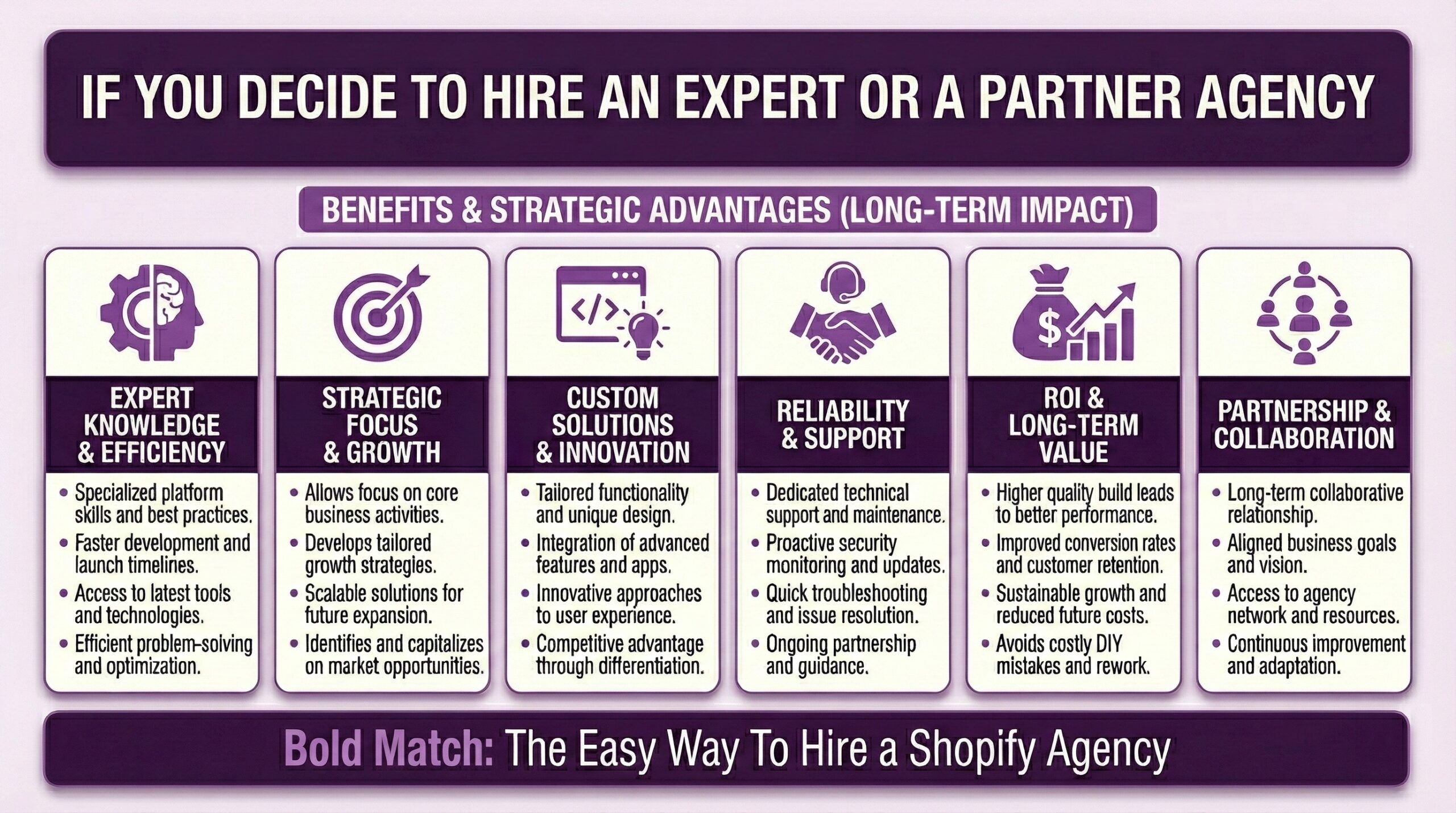
Remember, You’re Not In This By Yourself
Look. Eric and I came up with the idea for Bold Match specifically because finding the right expert help was harder than it had to be. The concierge services that existed were either over-focused on freelance consultants who weren’t much good beyond a certain growth point, taking commissions that created misaligned incentives or both. Partner Agencies were getting pushed toward merchants who weren’t good fits just because the deal closed. So I’m not going to pretend there’s a one-size-fits-all answer. Your business is different from the next e-commerce retailer’s business. Your technical comfort level is different. Your budget is different. Your growth timeline is different too.
But I will say this. The merchants I’ve watched struggle most are the ones who tried to DIY projects that were simply too complex because they underestimated what they were getting into. The ones who thrived knew their limits, invested appropriately in expert help for the stuff that mattered, and focused their own energy on the parts of the business where their expertise actually lived. The best use of your time is probably not learning Liquid templating. It’s probably building the retail brand that makes having to pay for Liquid expertise feel like paying out on a rounding error. Well. I think that’s gonna be it for me for today gang. So. Until next time, keep building something awesome! – Jay
Frequently Asked Questions (FAQ)
How do I know if my Shopify project is too complex to DIY?The complexity threshold usually comes down to three factors. First, does the project require editing Liquid code or working with Shopify’s APIs? If so, you’re probably in agency territory unless you have actual development experience. Second, are the consequences of failure significant? Checkout problems, migration data loss, and SEO damage can hurt your business for months. Third, is your realistic timeline longer than 4 to 6 weeks? Extended DIY projects tend to stall and accumulate opportunity costs that dwarf agency fees.
What does a Shopify Development Agency actually cost?
That’s hard to say. You see. Costs vary significantly based on the Development Agency’s size and the specific project’s scope. Basic theme customization runs $500 to $3,000. Full custom theme development usually falls between $5,000 and $20,000 depending on complexity. Headless commerce builds start around $50,000 and can exceed $150,000 for enterprise implementations. Platform migrations range from $5,000 for simple stores to $50,000 or more for complex catalogs with extensive customization.
How long does it take to hire and onboard a Shopify agency?
That’s another thing that’s going to depend on the individual agency, but plan for a vetting and selection process that will usually take 2 to 4 weeks if you’re being thorough. Discovery and scoping adds another 1 to 2 weeks. Actual project timelines depend on scope. Simple projects complete in 2 to 4 weeks, mid-complexity work takes 6 to 12 weeks, and enterprise builds can run 4 to 7 months. Plan accordingly and factor onboarding time into your project timeline.
Can I start a project DIY and bring in an expert or agency later if I get stuck?
Yes. Yes of course you can but expect some inefficiency. Agencies often need to audit or partially redo self-taught code before building on it. The technical debt from DIY attempts can add 20 to 40 percent to project costs compared to starting fresh. If you suspect you might need help, engaging an agency for initial architecture planning can save money even if you execute some work yourself.
What Shopify projects should I never attempt to DIY?
Platform migrations involving significant SEO equity are the riskiest DIY projects. The technical execution around redirect mapping and URL structure preservation requires expertise that takes years to develop. Checkout extensibility implementations are another danger zone given Shopify’s deprecation timeline and the API complexity involved. Custom app development requiring payment processing or customer data handling carries compliance and security risks that warrant professional oversight.
How do I calculate the opportunity cost of a DIY project?
Well. Just start with your annual revenue divided by 2,080 (working hours per year) to get your effective hourly rate. Multiply by realistic hours the project will require. Be honest here. Double your gut estimate. Add the revenue you’d lose from delayed launch, calculated as daily revenue multiplied by additional days. Compare this total to agency quotes. The math often reveals DIY is more expensive than it appears.
When does hiring a freelance Shopify expert make more sense than an agency?
Freelancers work well for defined, contained projects where you need one skill set. Theme tweaks, specific app integrations, or one-off optimizations fit this profile. Partner agencies make more sense for complex projects requiring multiple disciplines, for ongoing retainer relationships, and for high-stakes work where you need redundancy and accountability. Budget around $50 to $150 per hour for experienced freelancers versus $150 to $300 per hour for agency teams.
How can Bold Match help me find the right Shopify Agency Partner?
Bold Match is a free nonprofit matchmaking service that connects Shopify merchants with pre-vetted agencies based on specific project needs. Unlike commission-based platforms, we have no financial incentive to push you toward agencies that aren’t good fits. We evaluate agencies on actual performance metrics and match based on expertise alignment, budget compatibility, and communication style. The entire process is free for both merchants and agencies.